Bold Stories and Bigger Voices: A Writer’s Journey
‘ I was diving deeper in that idea I made a few days earlier and hearing your piano from the living room turning into your main character for one of your compositions feels so good after all. ‘
– What are some of the things you’ve learned about yourself over your years as an author?
I talk too much! Seriously, I love writing dialogue. I have a university degree in Film and Screenwriting, so a lot of my formal writing education was spent writing scripts, which are very dialogue-heavy, and I think my love for it comes from that. When you’re writing a script, lengthy descriptions are a no-no, so you have to generate an image of your character by making their speech unique; using accents, g-dropping, curse words and all the little fun things like that. Dialogue is delicious to me.
The other thing I’ve learnt is that I refuse to be defined by any genre. When I was starting out people were reminding me that my first book was what people would categorise me as, so I wrote sci-fi because that was what I primarily wanted to write. But then I came up with the concept of Sketching Scarlett, which is a kind of cute, cosy romance story, and then On the Stroke of Twelve, which is a fantasy retelling of The Nutcracker ballet. I have The Mermazing Adventures of Penelope Pond coming out soon, which is a children’s story! To me, a story that needs to be told is a story that needs to be told, regardless of genre.
-When you were a kid, what did you want to be when you grew up?
I remember when I was about seven, I told my mum I wanted to be a vet. She pointed out that I would have to do a lot of math in order to be a vet, which terrified me, so I decided to be a writer instead and was one for the rest of my life. A lot of my classmates predicted that I was going to be a writer when I graduated high school, and it seems like they were right!
-What would you say is the nexus of your writing?
I like addressing real-world issues within a fictional setting so that the reader is required think a bit about the world around them. Socio-political issues are really important to me. A lot of my stories feature disabled people too, because I wanted to represent my people in a realistic manner rather than just as a device for an able-bodied person’s redemption arc. That’s not a ‘must-have’ though, and I never intend to get preachy about it in my work. I want disability to be present, like it is it is in real life, but ultimately, I want to write stories that are entertaining.
– Do you think creative writing in the world is getting better or worse?
So much worse, and it’s not just limited to creative writing. There was a time, in the 80s and 90s, where, for every adapted idea, there was an original idea. Now, the market is just oversaturated with whatever original idea is popular at any given time, because those in charge are so concerned with making money they’re too scared to take a risk. For example, in the 2000’s, Twilight was released, and the market became saturated with vampire books. Then The Hunger Games was released, and the market was saturated with YA dystopian books. Now, thanks to BookTok, we seem to have an epidemic of romantasy, which is a genre I personally find really boring. Why set up this wonderful land full of magic and lore only for the focus to be on the more-often-than-not-cliché romantic couple? In stories like that, I’m rooting for the dragon. Dragons are way cooler than people kissing. In fact, I strongly believe adult fiction should have more dragons. More dragons and original ideas.
– Are you the type to plan out the whole story or do you tend to take it one paragraph at a time?
It is my firm conviction that planning is the death of creativity. My advice to new writers is always the same: don’t spend time making a big beautiful plan and writing things in pretty notebooks. Just get on Word and write. Write the thing. It doesn’t matter how many drafts it takes to get things perfect. No one cares or is counting. Because until you take those steps, you’re not a writer, you’re just a procrastinator. A story is a living thing and should be given space to breathe, grow and develop in its own time. Like a sourdough starter, but with less flour.
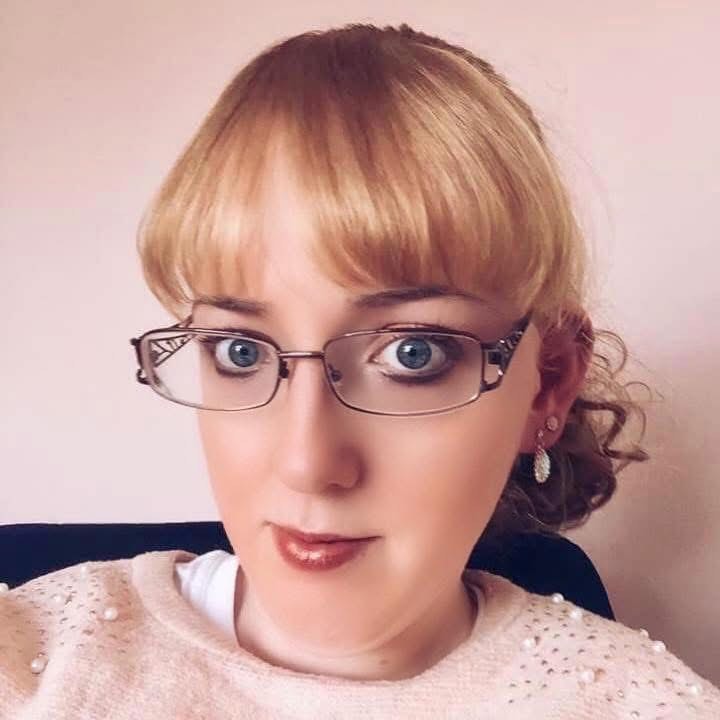
– How do you feel with the way your writing has led you to receive accolades from big names in the creative industry and even the Queen?
Well, it wasn’t my writing that did that, more my filmmaking and advocacy, but regardless, I’ve been so grateful for every opportunity that’s come my way. It’s important to me, because when big names like that send you accolades, it gives you confidence to do things again and again, and by doing that, you spread acceptance of disability, which is so important. For so many of my people, their disabilities robbed them of their voices, so I feel like I have to use mine.
Away from the disability angle though, it’s just cool, isn’t it? I’ve never understood why more people aren’t willing to put themselves out there and live boldly and unapologetically, which is completely different from living arrogantly or egotistically. You’ve got to stay humble and keep a level head, but there’s nothing wrong with having a strong sense of self-belief and telling yourself that you can do something, that you have a right for your story to be heard. Life was difficult for me growing up, and now that it’s less so, I intend to live it to the full and grab it by both hands. Anything less is just a waste.
Is there a place or experience that has particularly influenced your writing?
My life as a disabled person, definitely. And my love of classic sci-fi: Alien, Star Wars, Terminator… all that good stuff. I definitely think the strong female leads of sci-fi need to make a comeback. We desperately need a Princess Leia or Sarah Connor that the next generation can relate to.
– How has it been self publishing your books up until now as I know that is about to change?
Self-publishing was hard because I do not know the first thing about marketing. I could write the books and even make the covers using stock images, but the whole marketing aspect really overwhelmed me. Thankfully, I have a really great team at Big Thinking Publishing who take care of that for me now, and I just give them my creative input and opinions. Honestly, they’re a dream for authors to work with; everything is collaborative and everyone pitches in and just like that, results appear. My team are fairy godmothers, every one of them. They make publishing magic.
-Last but not least, do you think the glass is half full, half empty, or just twice as big as needed?
Full, but always with room for more. I want to fill the glass with positivity until my cup runneth over, because I genuinely believe the world needs more of that.
Join the Newsletter
Connect with Alice Barker
To follow Alice, you can find social media profiles here:
Read other articles in the issue
- Atrophy, Identity, and Art: Writing Through Change
- Filling the Extra Space: Painting What Science Can’t Explain
- Fragments of Feeling: Art as a Reflection of Self
- Freck Files: The Lens Through Which I See the World
- Take Two: A Piano, A Living Room, and a Loving Idea
- The Art of Feeling: Spacecheese on Love, Cacao, and Creation
- Traces of Yesterday: Capturing Nostalgia Through Art and Craft
- When Women Speak: The Language of Gesture and Gaze
 ManicWorld Magazine