Listening to Stone: Dan Peragine on Art, Education, and Inspiration
‘At times, navigating institutional expectations can challenge the fluidity of my work, especially when the market favours the momentary over the enduring.‘
– How are you an art educator?
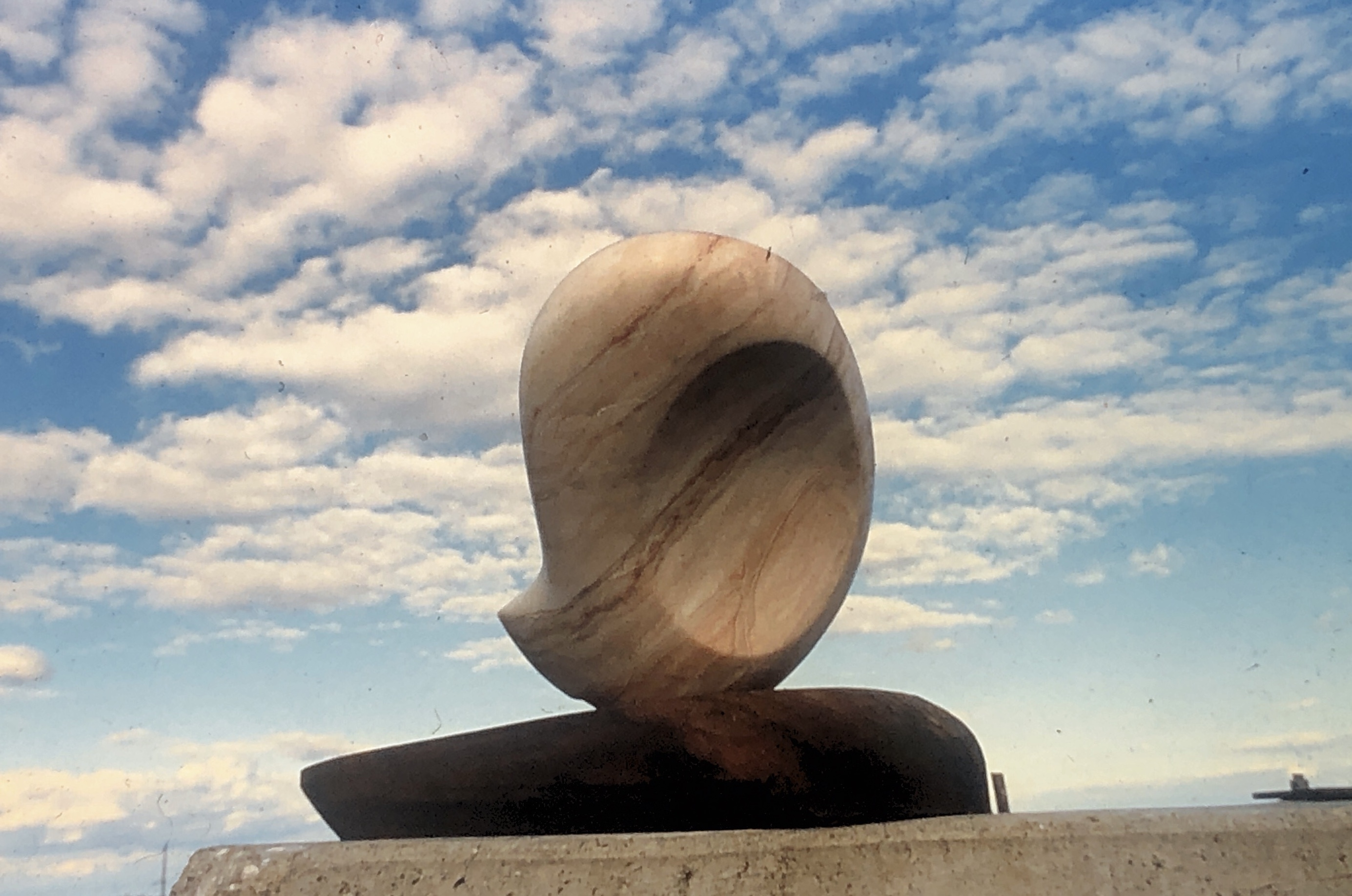
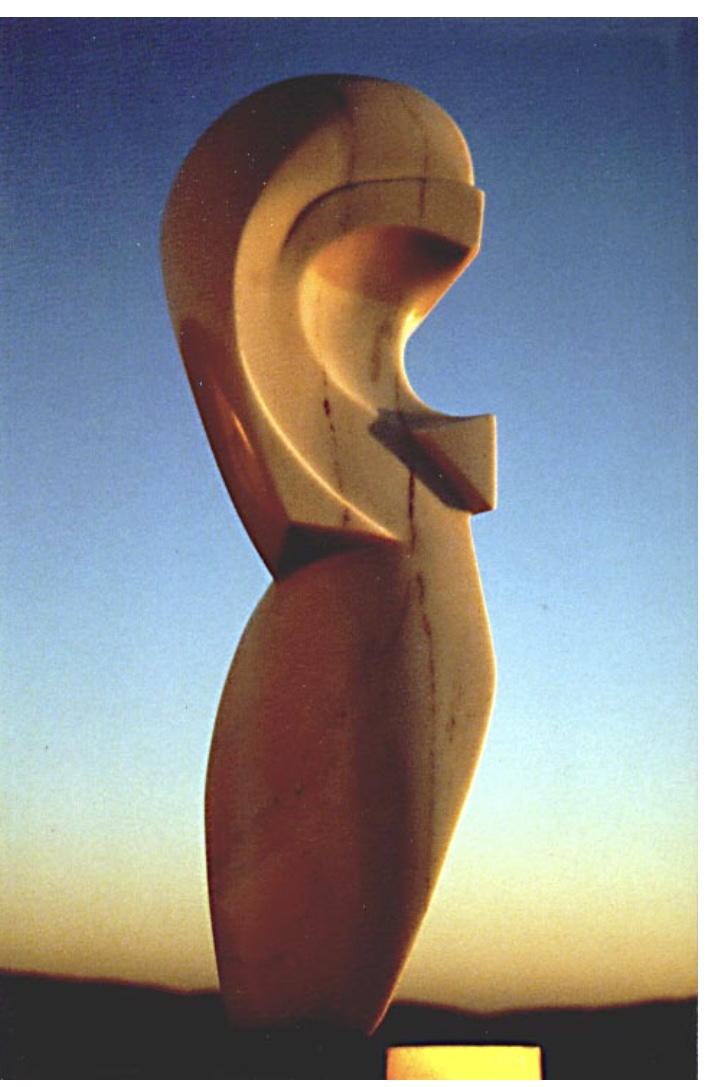
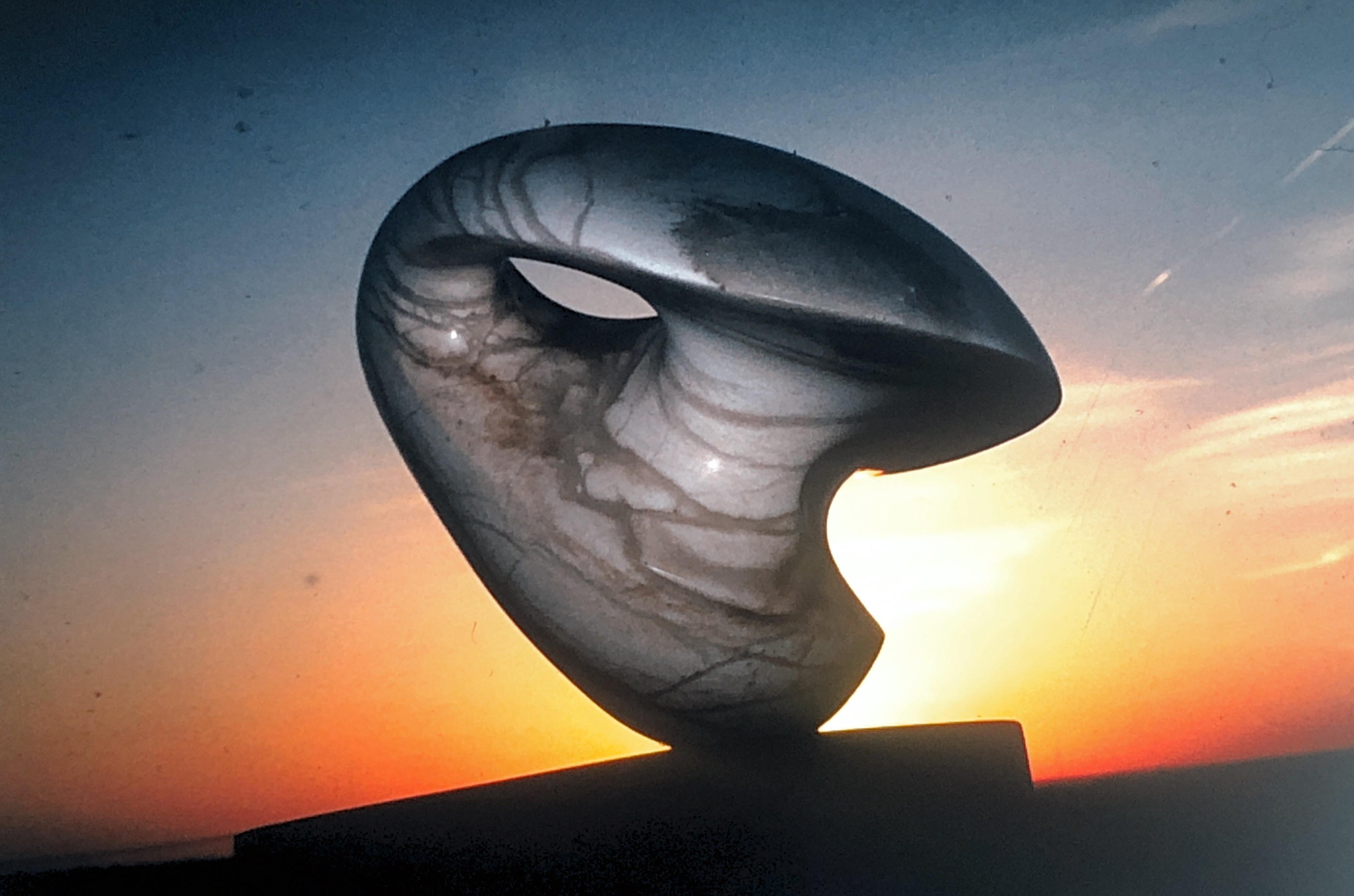
When I was accepted into the Graduate MFA Program at the University of Nebraska, Lincoln in 1974, I was awarded a teaching assistantship. They handed me the syllabus and said, “you’re the teacher now”. I have always valued the dialogue between artists. As an undergrad, I had the benefit of not only academia but apprenticed under a sculptor privately in his studio. This took me from painting to sculpture. Particularly the subtractive technique of stone carving and abstract form and began to appreciate the styles of Brancusi, Arp.
Ultimately, teaching has earned me a living. Teaching is a symbiotic relationship, I am always learning. At the University level, artist in the schools, community grants through state art councils , working in a maximum security prison in an arts/ crafts workshop to special education, helping students with Dyslexia, mild/moderate autism. The arts is a catalyst for change. I have a long history of being a “teaching artist”.
–Your sculptures are quite abstract. How much of planning and shaping goes into each one?
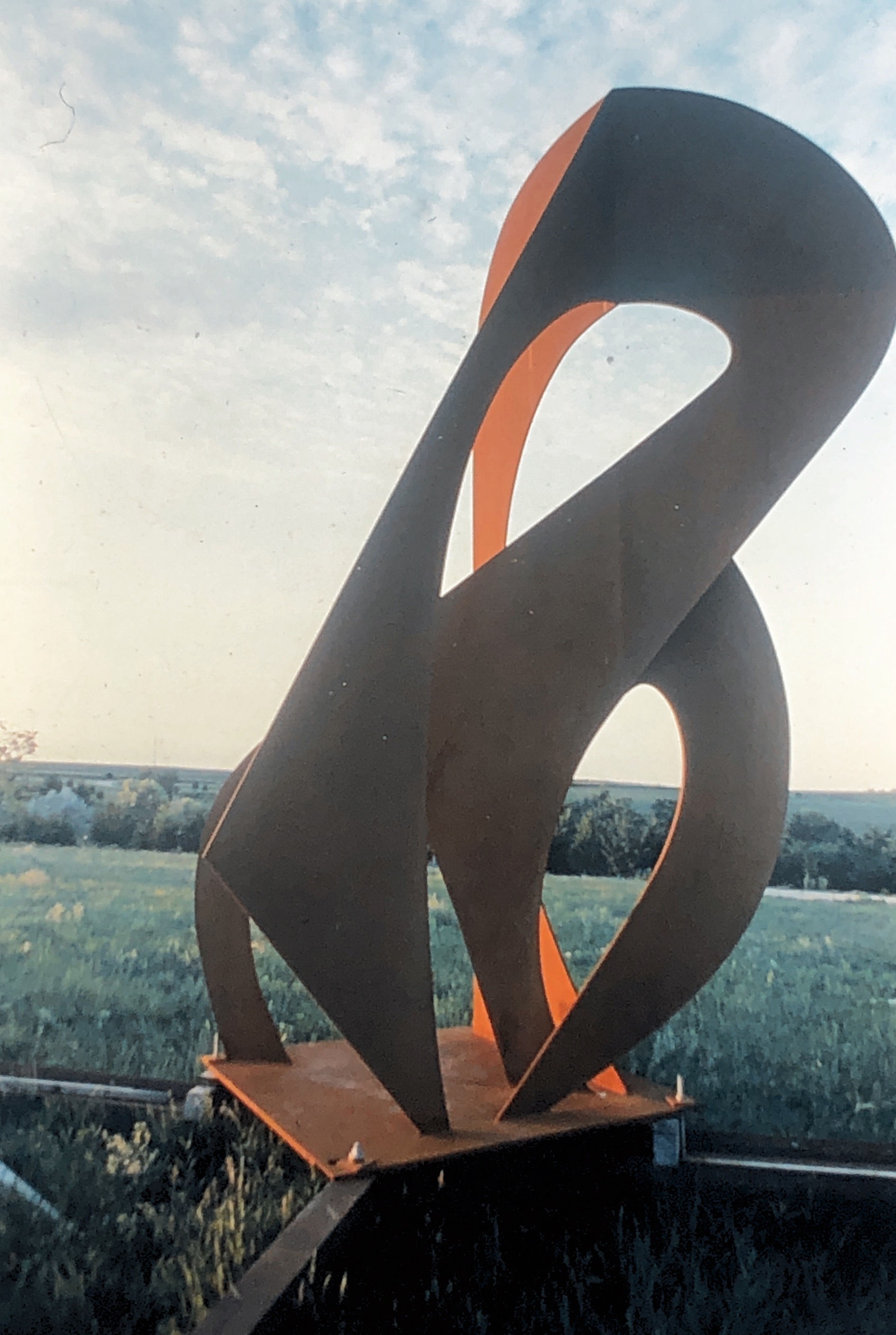
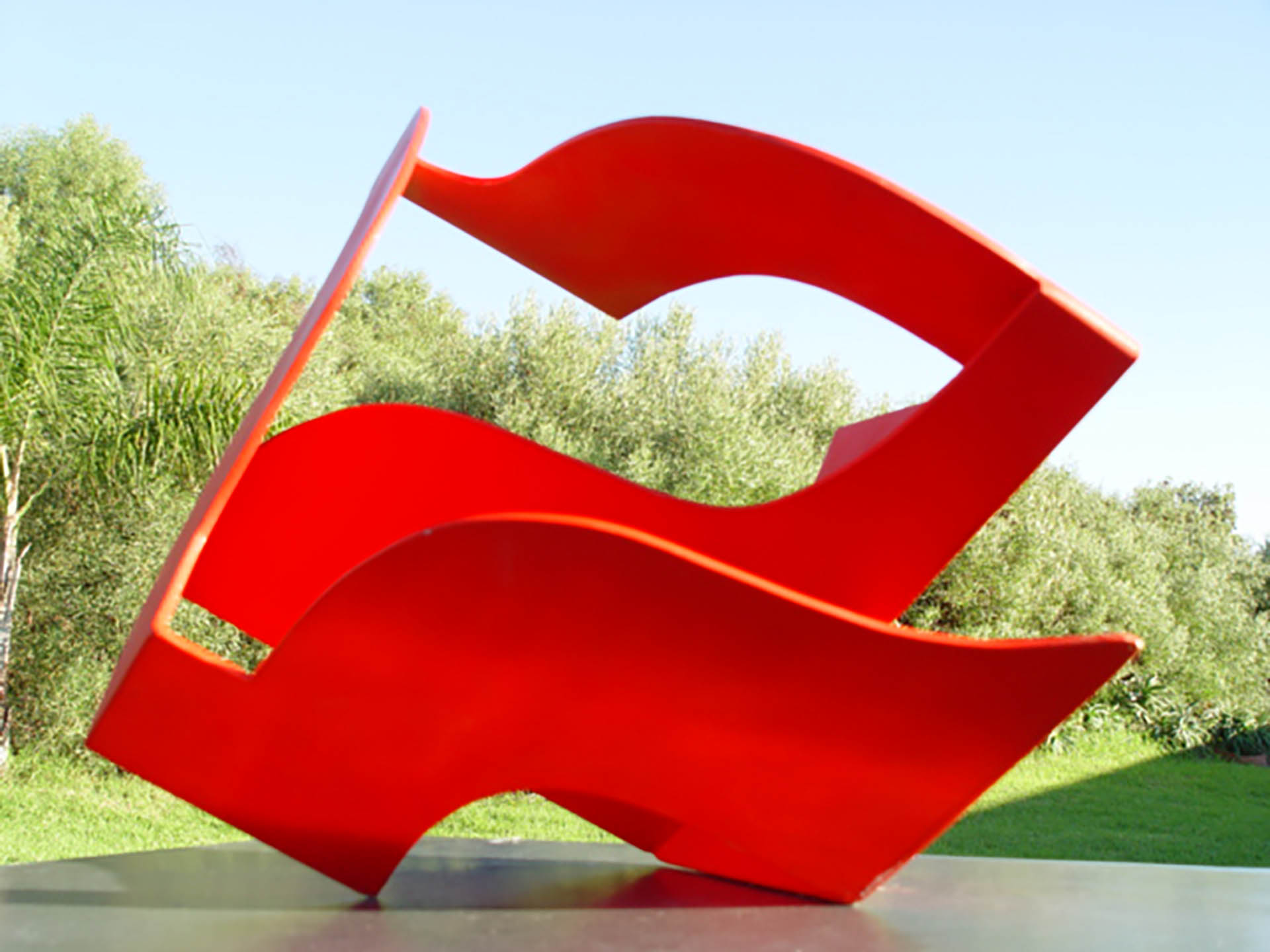
Each sculpture begins with a catalyst—an image, an object, a sensation, or a metaphysical question—and then unfolds through a process that is both structured and intuitive. While I often begin with sketches, maquette, or digital studies, I allow the material itself to inform the evolution of the form. Planning is essential, especially for larger or public works, but the shaping continues until the piece begins to “speak” its own logic. Abstraction allows me to explore universal themes without prescribing meaning, and I remain responsive to what emerges during the process.
Stone carving, forms evolved from the boulder in the field, in marble, drawing on the stone directly lay a path of realisation. Constructions, (assemblage) evolve from maquettes in cardboard, to Plywood, to steel, scaling the work in its process.
–Your fingers are dipped in so many different art forms, how do you get inspiration for all of it?
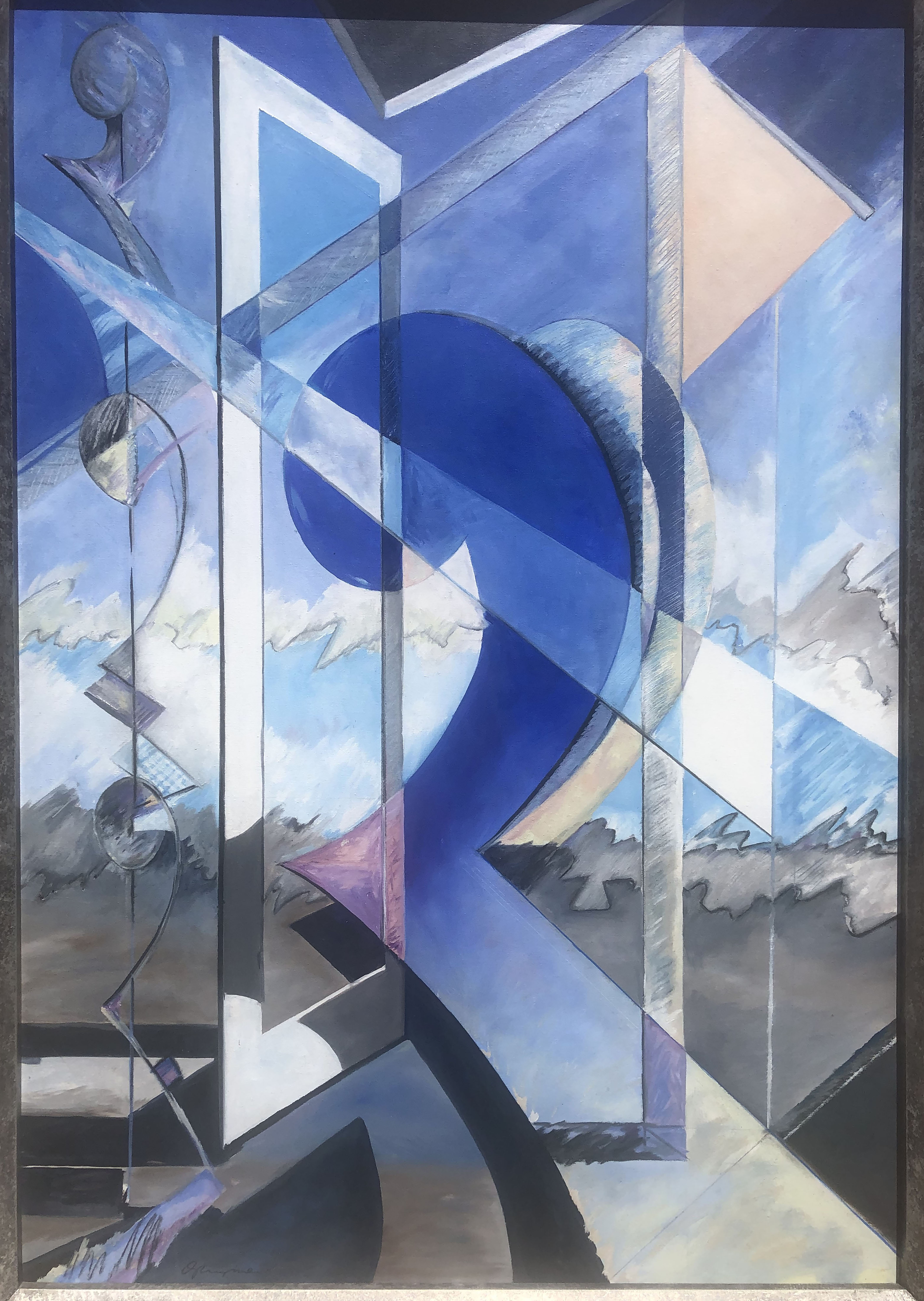
Inspiration, for me, is not isolated to moments—it is a continuum. Whether I am carving marble, painting, or sketching in a journal, I am engaged in a kind of listening. I draw from nature, architecture, mysticism, geometry, music, and personal memory, events I witness .
I also believe that each medium teaches the other. What I learn in drawing/painting often informs my sculpture. I follow the thread where it leads, without forcing a separation between disciplines. Most important is authenticity.
–What challenges your creativity?
Time, above all. I am now 74 years old. There is always more I wish to explore than the hours allow. I wrestle with the weight of history—how to remain true to a lifelong vision while remaining open to reinvention. At times, navigating institutional expectations can challenge the fluidity of my work, especially when the market favours the momentary over the enduring. Yet these challenges, in themselves, offer new directions for inquiry.
–Horses are a recurring theme in across your different art forms, why is that?
The horse is both a symbol and a presence. It represents strength, vulnerability, motion, and ancestral memory. I see the horse as a bridge—between the human and the animal, the spiritual and the earthly. In some ways, it carries the weight of the sacred. My use of the horse is not literal, but emblematic; it recurs as a form of remembrance and reverence.
–Sculptures and paintings and constructions, where did it all start?
It began in my youth, with drawing. I was compelled early on to capture form, light, and gesture. My path then expanded into three-dimensional work, particularly during my education and apprenticeships. Each medium was a natural extension of the last. Over time, I became less concerned with boundaries and more interested in how different materials and methods could help articulate an evolving inner language.
–Do you ever wish to control the way your art is perceived?
I am aware that perception is shaped by context, education, and personal experience. While I sometimes provide conceptual entry points, I do not seek to control interpretation. In fact, one of the most rewarding aspects of art-making is witnessing the diverse responses that emerge. My hope is that viewers enter the work openly and find something that resonates—whether or not it aligns with my original intent.
–What does rebellion mean to you as an artist?
Rebellion, for me, is the act of remaining faithful to one’s inner vision—especially when it diverges from trends or expectations. It is the quiet insistence on depth over decoration, on questions over answers. At times, rebellion is refusing to simplify, to flatten, or to appease. It is also found in the refusal to abandon wonder, even in the face of cynicism.
– Last but not least, do you think the glass is half full, half empty, or just twice as big as needed?
The glass is exactly as it needs to be. Its dimensions are shaped by the moment, by intention, and by perception. I see it not as a container, but as a vessel—sometimes holding, sometimes offering, and always part of a greater cycle of fullness and emptiness.
Join the Newsletter
Connect with Dan Paragine
To follow Dan Paragine, you can find social media profiles here:
Read other articles in the issue
- Art as a Diary: Expressing the Unspoken Through Colours
- Beyond Beauty: Art, Resistance, and the Imagination
- From Scribbles to Syndication: The Making of a Comic Strip
- Lost in Words: The Journey from Fan-fiction to Original Fiction
- Painting the Unseen: Monsters, Mental Health, and the Power of Art
- The Conversation Photo: Capturing Stories in a Frame
- The Phantom and the Frame: Poetry in Pictures
 ManicWorld Magazine