Tiff McFierce; You CAN Sit Here
‘the truth is, letting go isn’t always loud. Sometimes it’s subtle and slow, sometimes it’s just deciding not to carry something the same way anymore.‘
– What was the process of transforming this idea of keeping and letting go into something physically tangible?
There wasn’t one clear moment of transformation, just a very long gathering. Years of collecting objects, phrases, thoughts, feelings. Some inherited, some absorbed, some chosen. Years of experiencing things, exploring them, and running from them, asking myself: what do I still carry because I love it, and what do I take because I was told or made to believe I had to?
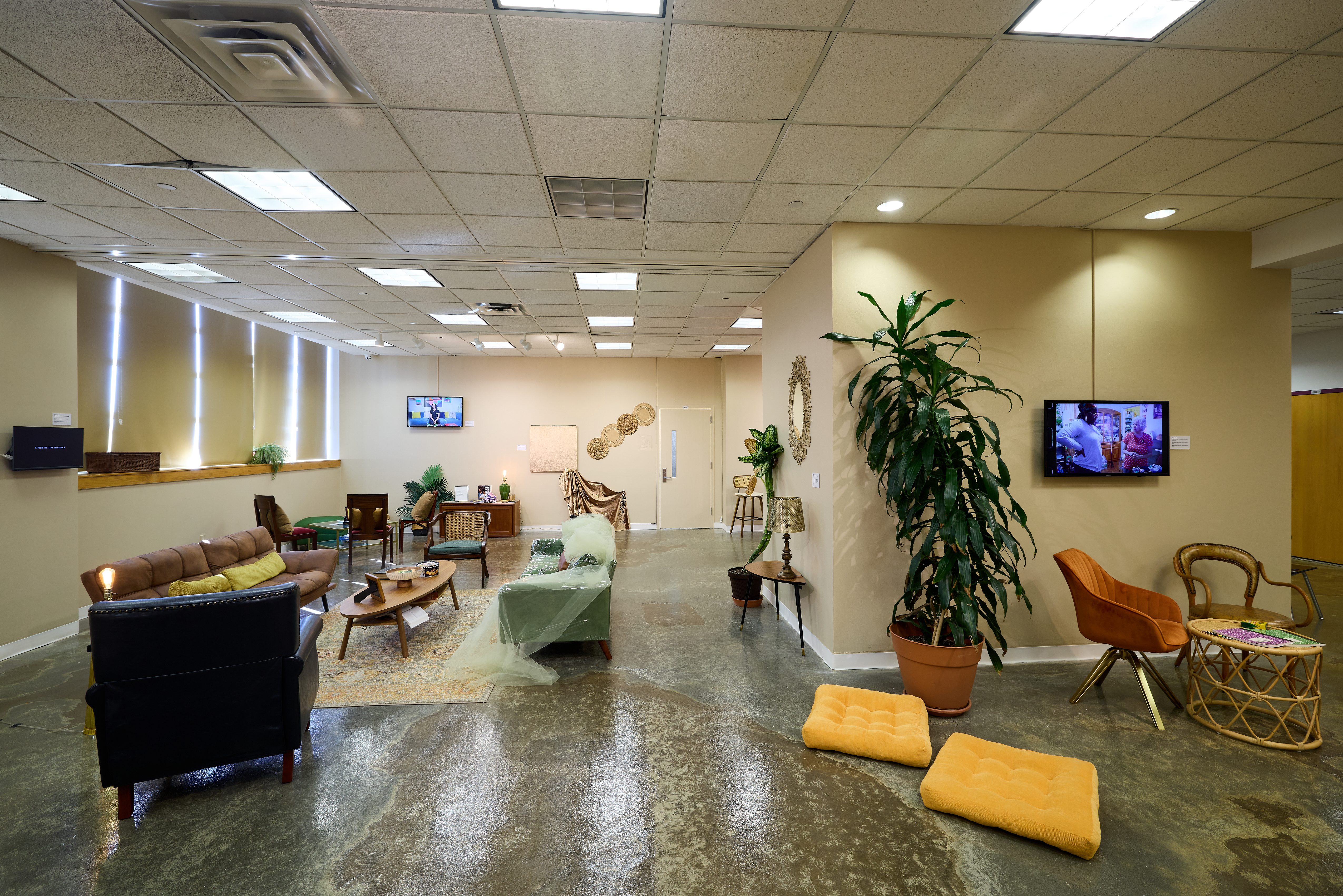
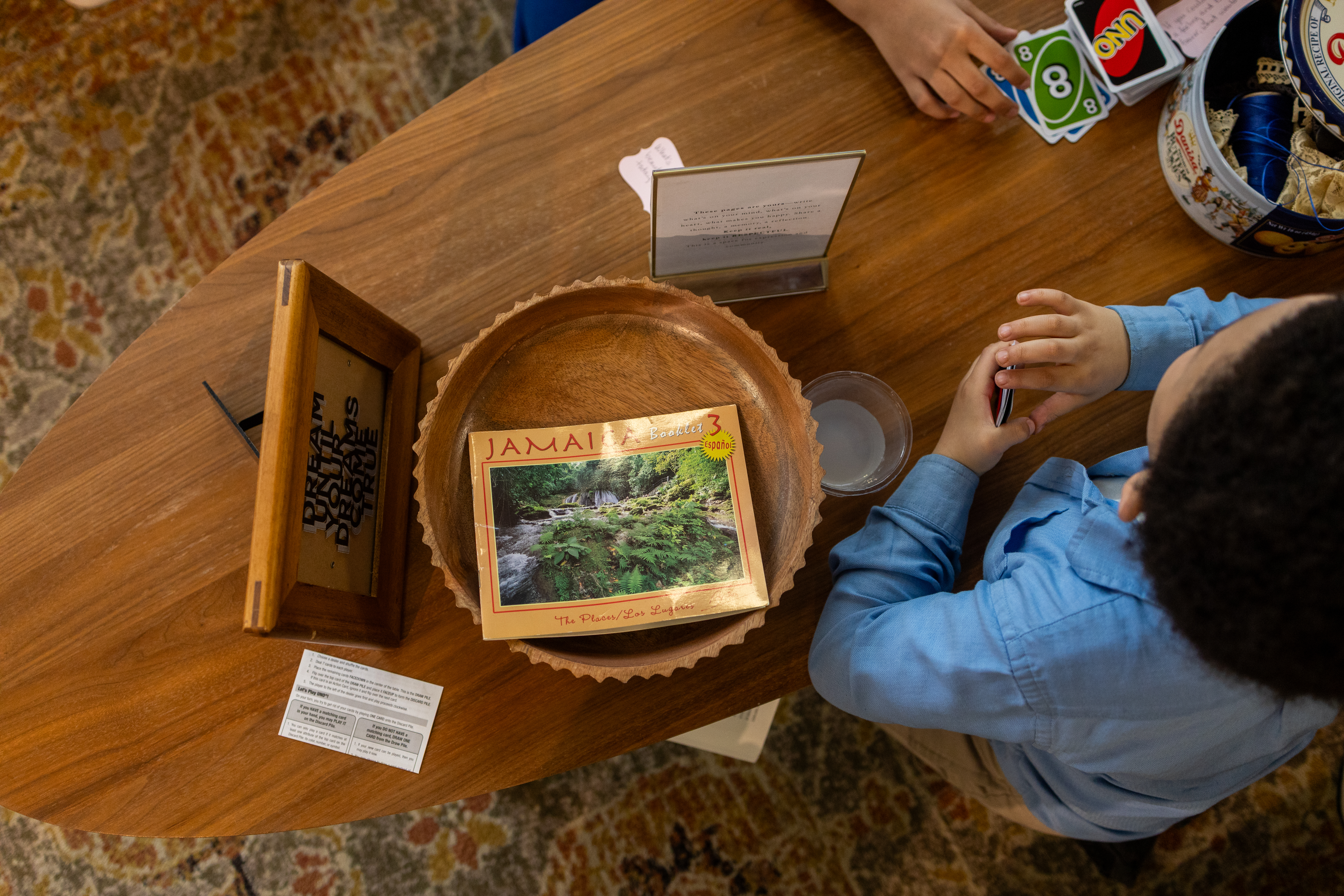
Making this exhibition meant confronting those questions in my body and in the physical world. It looked like turning poems and journal entries into wall text, letting old photos and new self-portraits become offerings and inspiration to my art. Taking the discomfort, beauty and tenderness of my upbringing: the plastic-covered couches, the silent rooms, the rituals that never got questioned, and laying them bare, not to expose, but to ask: what happens if we all stop pretending that survival is enough?
The materials and the furniture all came from real life. From second-hand and sustainable, with a mixture of the newness I am urging people to take heed to, I sourced pieces and curated this entire show once I got the opportunity in September 2023, to the day it opened March 20, 2025. I am still finding new ways to allow it to evolve and breathe through the addition or subtraction of art, writing, sound and furniture. Everything is a portal. Because the truth is, letting go isn’t always loud. Sometimes it’s subtle and slow, sometimes it’s just deciding not to carry something the same way anymore. I built You CAN Sit Here as a room where memory doesn’t have to become a prison, and tradition can evolve. That’s what made it tangible- not the objects themselves, but the decision to treat them like living questions.
– Are the objects in the living room something tangible/valuable to you or did you consider the people who would be experiencing the exhibit as well when you designed it?
Yes, there are absolutely objects in the You Can Sit Here living room that are valuable to me and just as deeply, I considered the people who’d be experiencing the exhibition. The audience was at the forefront for me the entire time- so much so that I had to keep reminding myself that I was still allowed to take up space too. Inviting people into my artistry, my practice, my life and my thoughts didn’t mean I had to perform for relatability, but I had to take everything I had gathered in all my research and existing and create from it.
This is my debut exhibition, my first experience with interior and exhibition design and while I’ve been dreaming and writing about it for 10 years, I still felt like I had no idea what I was doing at times. That sense of fear, fraud, failure, or not being ready kept creeping in. The technical side? I taught myself. I’d been studying and researching for years. But there was no one walking me through this as I’d hoped while working with a gallery, or even a tangible support system through folks that I’ve known for quite a while. It was an insular process that required a lot of emotional and physical labour.
So when it came to what people might need or want from this space, I pulled from what I’ve learned over two decades of holding events and storytelling spaces—especially through my music direction and DJ career, and my wellness brand, Look IN. I thought about the stories people have shared with me, the truths they’ve entrusted to the spaces I’ve built, and the awakenings and reckonings I’ve witnessed. That stayed with me.
But this time, I also had to resist the urge to centre everyone else at the expense of myself and my expression. I did have to reword and hold a few things back at the discretion of the gallery and their audience, but I found ways to allow it to push me further in how I express, myself and leave room for interpretation which is needed in art. This wasn’t about over-giving or curating for approval. This was about choosing truth and curiosity and stepping into a new practice that sits at the intersection of disciplines. I’m an inter/multidisciplinary artist, and also someone who curates and pulls up for the community. I see vision through a vast lens, not just my own, and that’s always going to shape my art. This exhibition held all of that.
– Did you originally intend to have sound, video, photography, and original written works as well as the art pieces or was it something you realised along the line that was necessary?
Yes, I originally intended to have sound, video, photography, lighting and original written works as part of the art pieces. This was always part of the vision as I was leaning fully into the unique mix of mediums I’ve been working with across my career. This is the kind of interdisciplinary expression I’ve lived and worked in for over two decades and included this multi-medium concept in my original pitch. Sound, visuals, movement, and writing these aren’t just additions- they’re my language.
I’ve been DJing for over 14 years and was the first woman and the first Black woman to be a resident DJ and music director in the NBA and WNBA at The World’s Most Famous Arena- Madison Square Garden, working with the New York Knicks and New York Liberty for eight seasons. I’ve musically directed, curated and DJed across worlds for brand campaigns, cultural institutions, celebrities, and deeply personal community spaces. Music has always been in my life before birth as a Bronx-born, New York City native of Jamaican descent. I was walking before I turned one, and I was already dancing to music before I even started dance classes at age four.
Movement, music, and meditation are the pillars of my wellness brand, Look IN, where I bring healing through sound and somatic work. I’m trained in frequency healing and sound work. I play sound bowls, and curate soundtracks for people and establishments, and I specialize in using music not just to entertain but to restore. My writing is just as much a part of that offering. I’ve been writing my whole life as well as have been published in outlets like WebMD, Shape Magazine, Bustle, and more. I’ve always used writing as a way to find my voice, give sacred space to my rage or joy, or when I felt silenced. So when it came time to build this exhibition, including writing wasn’t even a question, along with the other mediums. All of these elements live inside me and I’ve used them to help myself and others for years. It made perfect sense to let them all speak here too as they are my languages, especially music and movement.
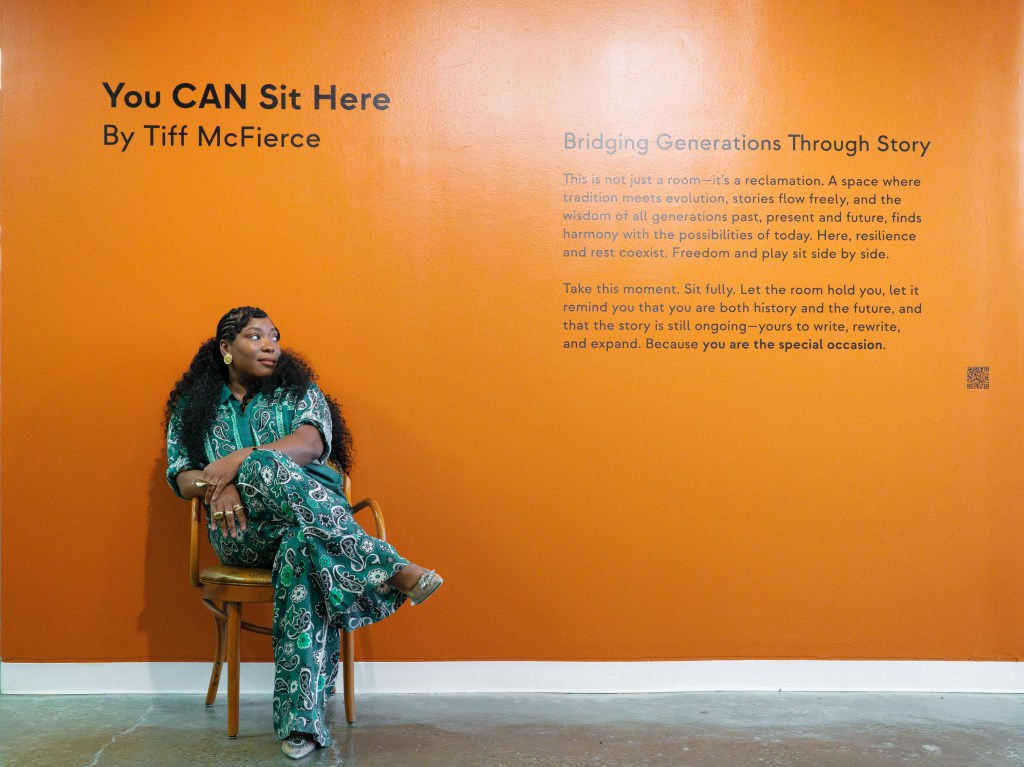
– As an artist, is it enough that your art just be enjoyed without all the focus on the meaning it might hold?
Everything I create has meaning because everything about my lived experience as a Black American and Jamaican woman holds meaning. Even when I’m just resting, dancing, or moving through joy, that’s meaningful. That’s a radical act in itself. I’m drawn to lives and lineages filled with autonomy, beauty, resistance, and care so that naturally infuses what I create. But that doesn’t mean I’m trying to spell out or perform meaning every time I make something.
There’s room for rest, joy, pleasure, and alignment that doesn’t need to explain itself. There’s also room for urgency, clarity, and making a statement. The two aren’t opposites. I don’t believe in either/or, nuance is everything. There’s always room to “just enjoy” my offerings.
Once I put something into the world, whether it’s a DJ set, a film, or an installation, it’s up to the viewer how they want to meet it. I might offer intention, but they’ll experience it in their own time, in their own way. Some things hit you right away. Others don’t land until months or years later. That’s the power of resonance and art.
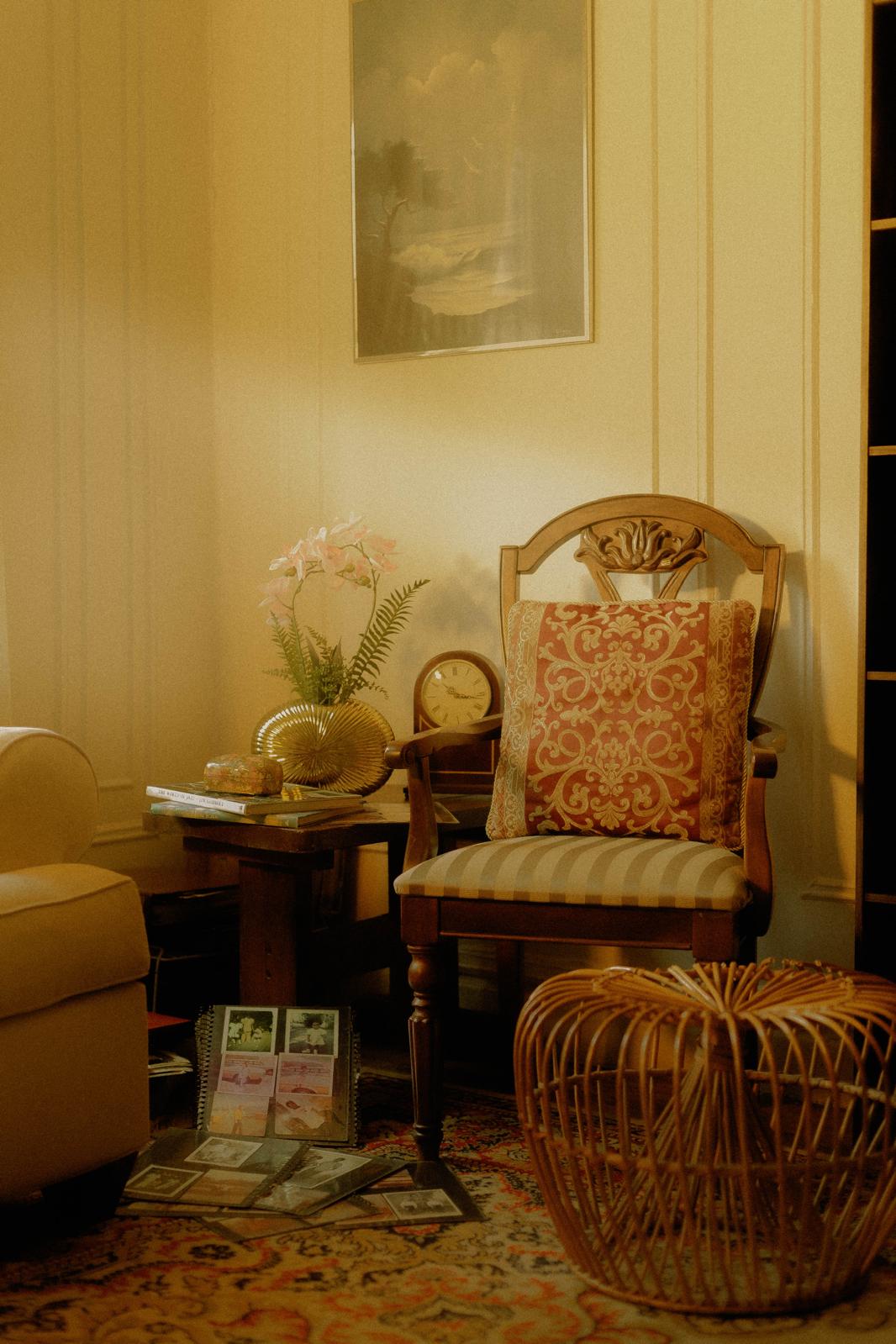
Why did you feel the need to touch on the past and the future in the exhibition?
There’s this quiet tension I’ve lived with for years, the kind myself and so many others inherit before you even know what inheritance means. A house full of things that were supposed to be for later, or for someone else, or too good to use. Objects waiting for the right moment and whole identities shaped around waiting, holding, preserving- but not necessarily living. I wanted to hold that weight up to the light.
My exhibition isn’t only about nostalgia. It’s about that razor-thin line between reverence and stagnation. Between what we keep out of love, and what we keep because we don’t believe we deserve something new. Some of the past taught me caution and some of it taught me courage, and I’ve had to learn to hold what works and move differently when needed. The future for me isn’t about escape, it’s about embodying authenticity, and space and choosing and creating something that feels honest from it. Even if that means I’m the one breaking certain cycles with no immediate blueprint.
I needed both in the room because when we talk about liberation- of the self and of our communities, it doesn’t happen in a straight line. Life isn’t linear. Some of our lessons repeat themselves until we’re ready to meet them differently. You CAN Sit Here had to touch the past, sit with the present, and imagine the future all at once. It’s in that tension that I prompt the audience to ask themselves: What’s worth carrying? What’s worth releasing? How are we using our imaginations within it all?
– Which do you believe is stronger, your experiences or your emotions when creating art?
If you’re asking me whether my art is more rooted in life events and experiences or in the emotions those events stir up, I’d say it comes from both. Sometimes art comes through emotion because that’s the only way it can. When I need to express, release, or even just feel something rather than bypass it. There are also times when I let the emotion sit with me, not to regulate it or fix it, but to witness it. And eventually, those feelings pull something out of me, so it’s not stuck inside my body or my head.
My art is in the art, and whatever it pulls from is what it pulls from. For this exhibition, You CAN Sit Here, the work is rooted in how I feel about what I’ve lived through, but it’s also about the experiences themselves because so many people have been through these same things, even in different ways. So, it’s not one or the other, but about where they meet. My emotions help me access the truth of the experience, and the experience reminds me I’m not alone in it.
– Does working in isolation fuel your creativity or hinder it?
Just like the themes in You Can Sit Here, isolation and collaboration each have their time. They come in seasons, or even different hours of the day. There were moments in this process where working alone was necessary and deeply fulfilling. When you’re creating something this personal without a true collaborator, without someone nurturing it with the same reverence, vision, or passion, you learn quickly there’s nothing to rely on but your gut. Your root. The metaphysical and physical reality of self-trust has to bloom and integrate, right then and there.
Relying on my own counsel pushed me into another dimension of myself. There were so many rebirths during this process. So many releases. So many new perspectives and repeated lessons. It’s common when doing something new to reach for others’ perspectives. But time and time again, I had to come back to and watch how often I reached for people who simply didn’t reach back. That’s when I realised: this was an isolation season.
Still, the collaboration did show up in intentional ways when I asked and received. I had an old dance friend help me with lighting and camera operation for the film, I met my intern just two weeks before opening and that final-stage help was needed, especially with the physical setup. It’s a relief not moving heavy furniture alone and to be talking to yourself the whole time right before your debut opening.
Throughout the full two-year process, it was just mostly me: writing on whiteboards, books, post-its, typing, recording voice notes and listening back to sift through my ideas while figuring out a bunch of things I’ve never done before. I crave more collaboration, but I want it to be aligned, healthy, and reciprocal. I’m not interested in being the one doing most of the work on a group project or constantly wondering if others see or understand the vision. That dynamic can come from both projection and pattern: when you’re working from a wound of not being enough and others are fatigued by the scale of your idea. But it’s in my job as an artist and a human to discern, regulate and stay open to a life that creates and receives what I desire.
– Describe the process of selecting the pieces for this exhibition.
I knew from the beginning I wanted a piece on the floor that said “Don’t sweep anything else under here” in vinyl, placed underneath a halfway rolled-up rug with a mirror sitting on the floor against the wall nearby, so people could still see themselves when they looked down. Next to that is a gold rotary phone I spray-painted, sitting on a gold podium. There were a lot of pieces I thought of that I wanted to feel like double entendres not just in the sense of having two meanings, but in how they reflected my truth and left room for someone else to find theirs.
This was my first time creating visual work like this, and I had to take risks. Some things didn’t make it in just because I didn’t have the space or equipment, but other pieces I got to try my hand at like the large wood board I picked up back in 2023 that I wrapped in gold and jewelled to become a prompt wall for people to write messages to themselves and each other. I sourced a lot of the furniture and materials for over a year and a half. I wanted browns, golds, and oranges not just because they’re beautiful, but because they speak to Black and Caribbean culture, to the solar plexus, to healing, power, sound, and legacy. I experience sound in colour, so my colour choices were tied directly to frequency and wellness.
There’s a piece called Give Thanks that I made by adorning a vintage peacock chair with reworked faux flowers. It’s one of my favourite pieces. The chair has a complicated history, found to have originated from Filipino prisoners hand-weaving them, later being taken by Europeans buying them after flying to the Philippines to watch them be made by the prisoners, and eventually becoming a symbol of Black power and opulence in the U.S. I wanted to honour that whole lineage while giving it new life.
I also included work by people who are featured in the film portion of the exhibition. I wanted it to feel like when you walk into someone’s living room and see artwork or special objects they’ve collected from their travels or received from friends. That’s exactly what I did here. It was important to create a space that was both installation and art, personal and shared. Everything was placed with care.
– Last but not least, if your creativity could only come from either your heart or your brain, where would you choose and why?
If I could only choose one, it would be my heart because that’s where the truth lives. My creativity doesn’t come from a formula or a theory. It comes from lived experience, ancestral memory, grief, joy, resistance, prayer, rage, and reverence. It’s the gut feeling before words arrive. It’s the knowing in my chest that tells me when something needs to be said, even if it’s not easy or pretty.
The mind is useful. It helps me shape, organise, and refine but the heart- is its own source. The heart knows what’s real. Every piece I’ve made, every set I’ve played, every space I’ve held has come from that place. I create from the heart because the heart remembers what the world tries to make us forget.
Join the Newsletter
Connect with Tiff McFierce
To follow Tiff McFierce, you can find social media profiles here:
Read other articles in the issue
 ManicWorld Magazine