Respite in a World on Fire: Finding Balance in Dark Art
‘ Art should touch the soul, and expand our vision, especially in this age of social media and the internet. It should free us from that.‘
– How did you first start drawing?
I remember this so clearly, I was in 2nd grade, in Catholic school, and the teacher wanted us to draw a picture of the story about the shepherd who left his flock to find one lost sheep. I drew the shepherd holding the sheep, holding a wolf at bay with his staff, but it wasn’t stick figures. It was a fully fleshed out drawing. The teacher was dumbfounded. Even I was dumbfounded. I’d never tried to draw before. And in spite of that, my parents weren’t too supportive of me pursuing art. I get that they wanted me to have something more stable for a career, but I’ve always wondered how far I might have gotten with real training.
– Are there parts of your everyday life that seep into your art?
My art is more of an escape from everyday life, although I’m heavily influenced by games. I also like to reinterpret things I see that impress me.
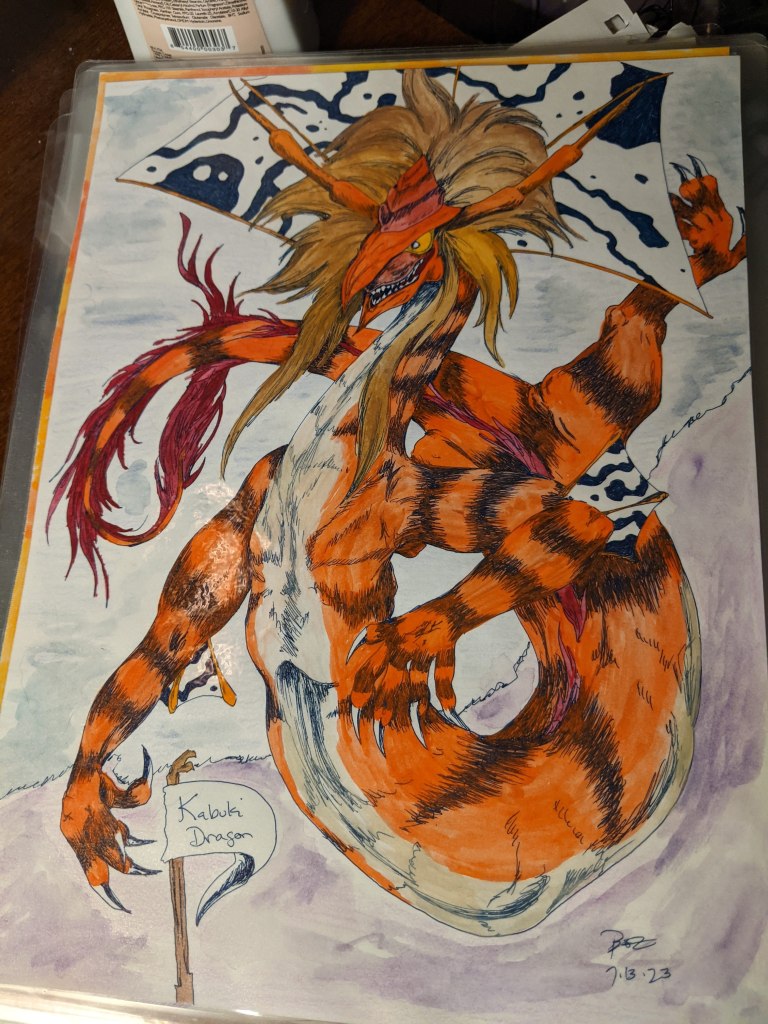
I have a lot of anxiety, so my work tends to the creepier. For example, I do drawings based on YuGiOh cards, and some are scary looking, but some are cute. I take the cute ones, and try to make them look darker. There’s a card called Starboy, I think, and it’s not exactly cute, but he’s a pretty innocuous looking starfish. My interpretation gave him slightly longer teeth and a bit of a scowl, and suddenly, the whole card is changed. I suppose it reflects my cynical, stressed view of the world.
– What would your art say if it could speak?
“What if you looked at me through…these eyes? ” Maybe, like Shrek, it would insist it has layers. I write as well, and I have a character who is a Prince of Hell, yet he’s not evil. From his point of view, he does what he must to maintain balance. Likewise, the creatures in my pictures may look evil but actually be gentle. Or the cute, fluffy bunny (I can draw them, contrary to popular belief) might be Monty Python’s killer rabbit with fangs.
Don’t judge. That sums it up. So much of my work is a twist on old standards. Did the standard change? Or is it just my view?
– Where has boredom taken you lately?
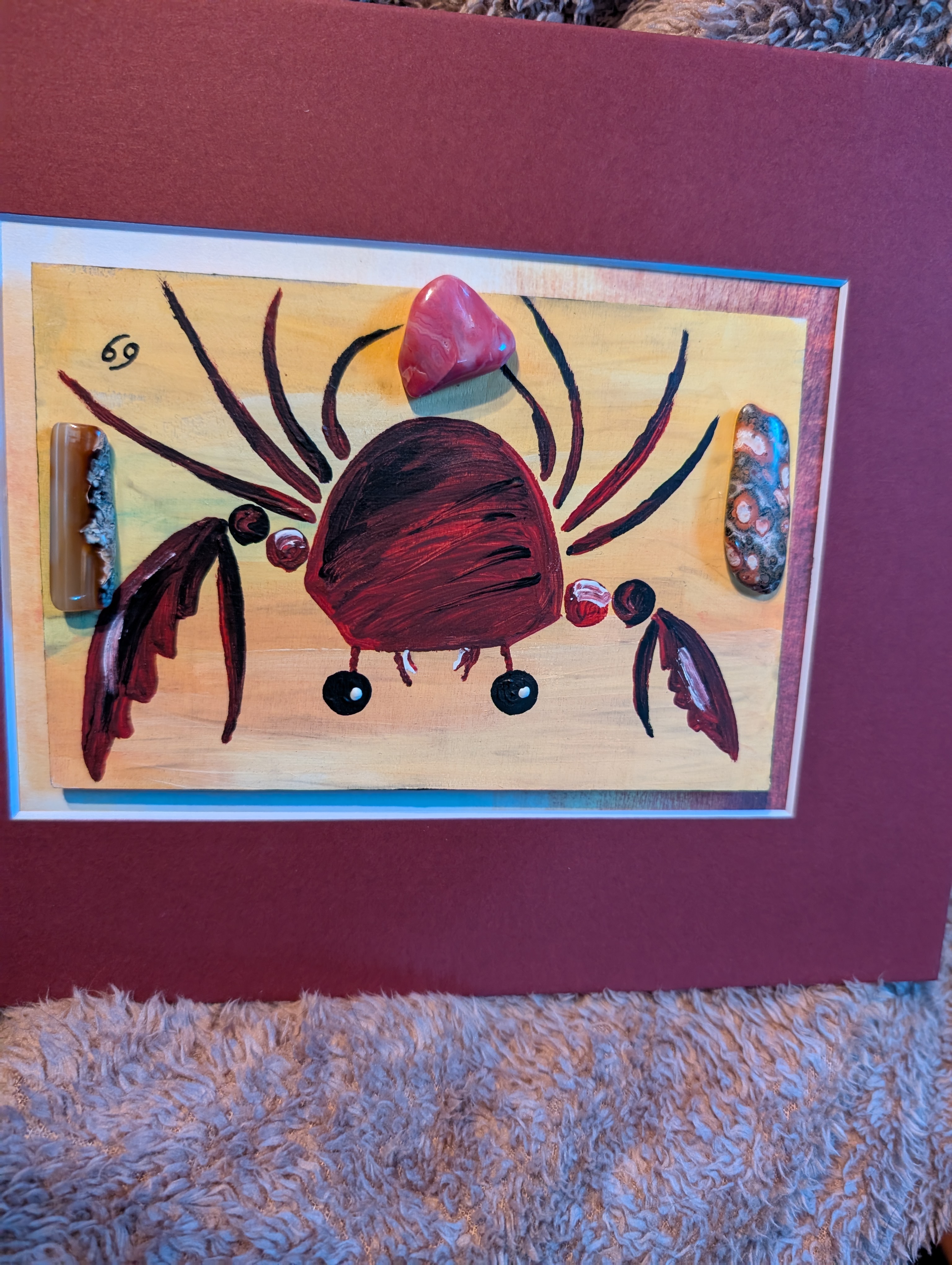
I don’t have much time for boredom, but recently I went back to painting. Not adding watercolours to drawings, but actual acrylics on canvas or balsa wood. I also learnt the technique of adding salt or sugar to paint. New techniques and always learning keeps it fresh.
I also revisit old works to freshen them up. Changing the colours, adding a few lines or shadows, gives something new life. It also may show growth.
Also, I write, and as those ideas develop, it gives me new scenes and new characters to draw. I storyboard a lot, so the two hobbies feed each other. It makes an ongoing cycle, and often when the writing is blocked, the drawing breaks me free, and vice versa.
– What important issues are fuelling your art these days?
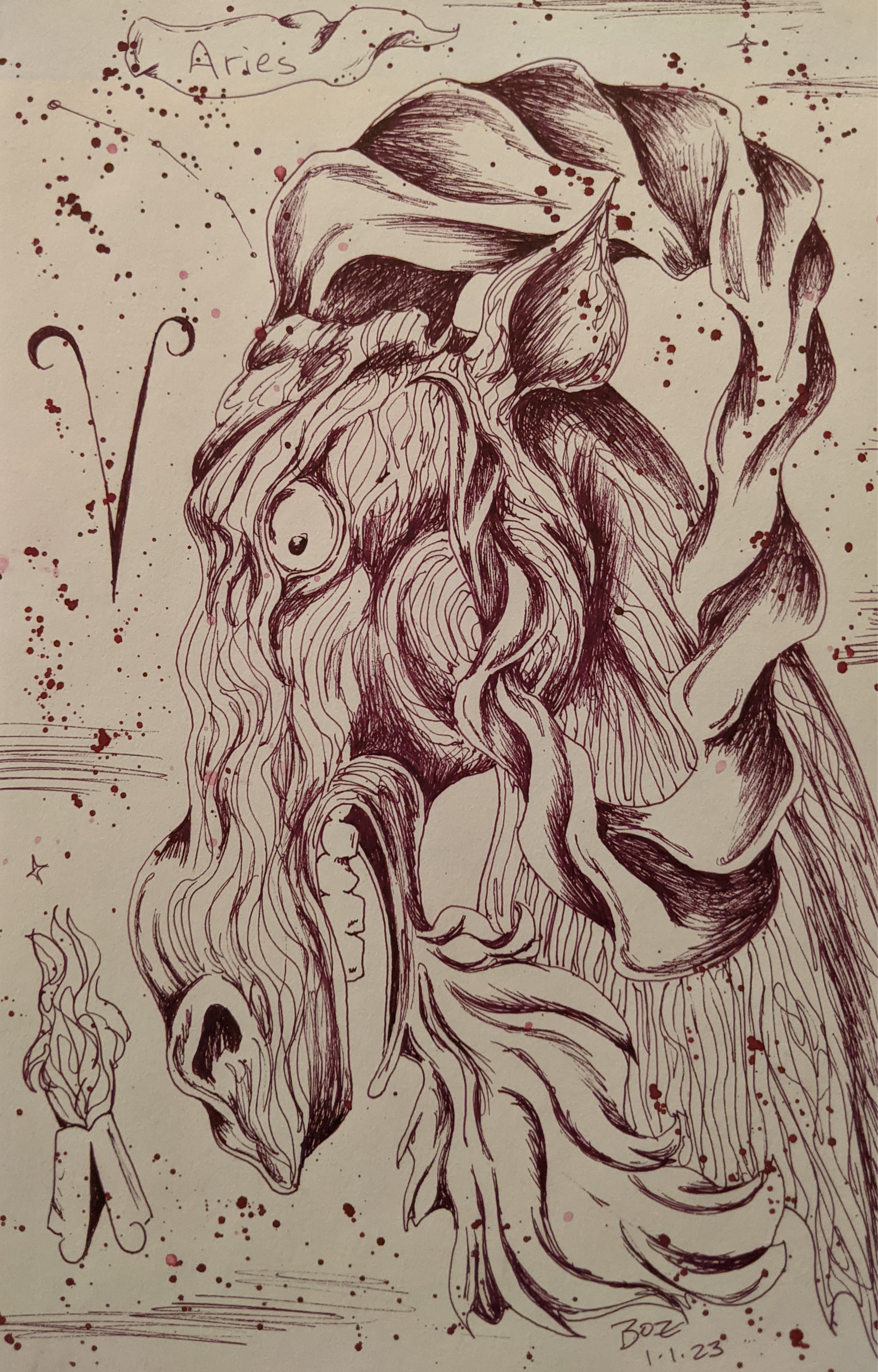
Right now we’re bombarded with major issues. Like a lot of people, I’m stressed constantly, like my brain is in a fight or flight state. I haven’t been too keen on creating new works, but I’m going back and adding colour to older pieces, and that’s soothing. It helps take everything down a peg, especially reworking pieces geared to nature, like the Celtic Zodiac.
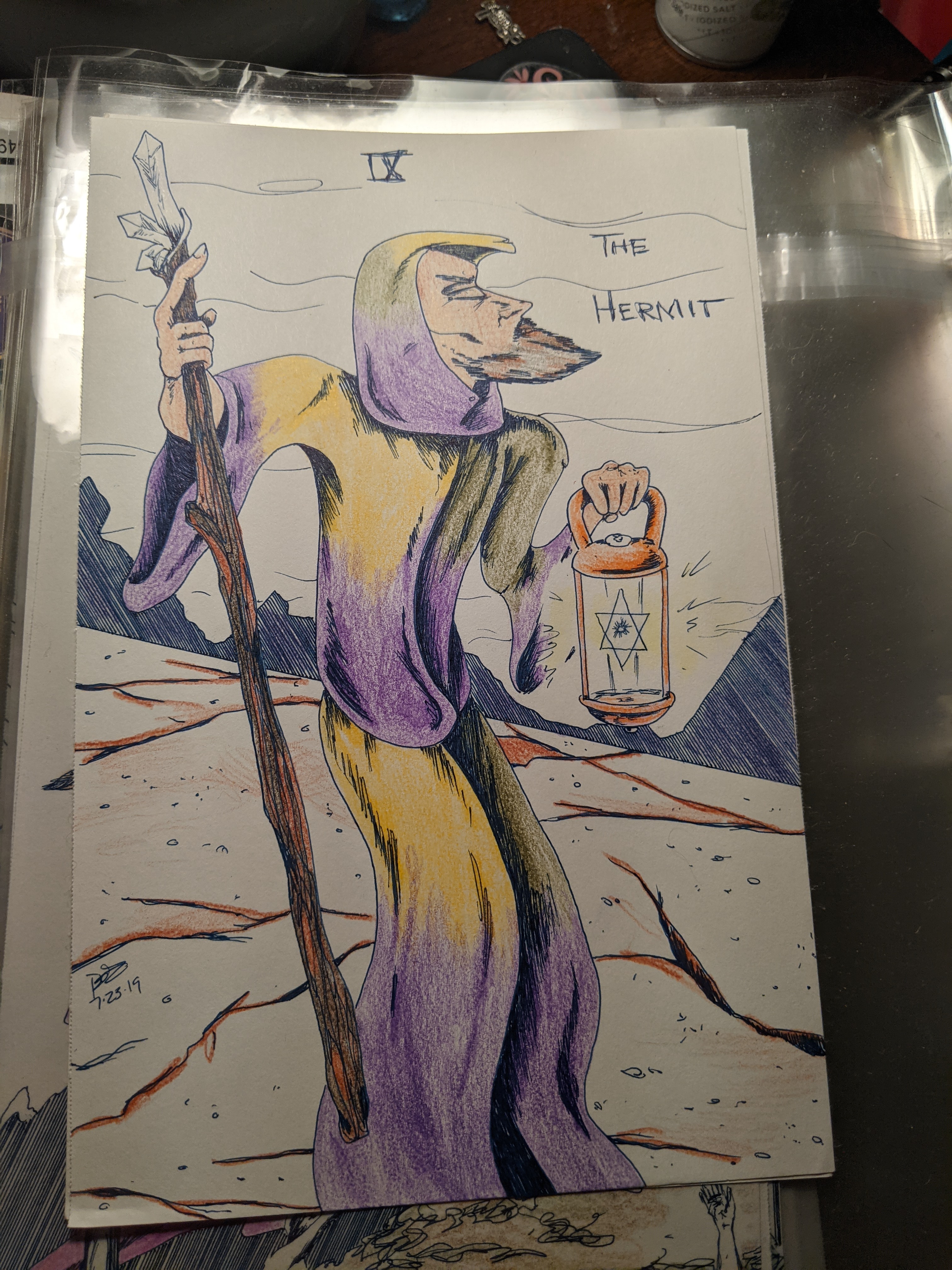
Gaming is big, now. People need the escape more than ever. I’ve always done the best loved D&D creatures. I’ve started doing cryptids, as more paranormal subjects are investigated. I’ve tried anime, which is not a style I care for, but I can do it, and the few pieces I did sold quickly. In the interest of diversity, I’ve done an Egyptian Zodiac and a Mayan one. Supporting other cultures this way helps reinforce fantasy while also teaching about the history of other cultures. That stuff is of highest importance now.
I don’t do political art. I can’t. I’m sure some of it creeps in because of my views, but we all need to step away. I’d rather my work be a respite for you, a breather. It may be dragons or goblins or vampires, but right now, those are a much lighter load than our reality, and it’s soothing to me to make it.
– Do you believe that your geography has a more direct impact on your art than your history?
Maybe a little, but my work is primarily fantasy. It has a small impact on my backgrounds. I lean towards more greenery, whereas maybe if I were in the Southwest I’d use more desert scapes. In a less literal sense, being from the northeast made me open-minded and accepting, so there’s a lot of diversity in the characters I do. I love changing up looks and costumes and colours, especially in breaking away from the norm or the expected.
– When people look back at this moment in the history of art, what do you hope that they’ll say about you?
That I’ve grown as an artist. Years ago, there was an almost cartoonist look to my work. I think my style has matured.
– Do you believe that all art should incite us to view the world differently?
Yes. Art should touch the soul, and expand our vision, especially in this age of social media and the internet. It should free us from that. It should make us wake to our surroundings. It should also excite a desire to learn. An example is what I said before about exploring different cultures. Doing the Mayan zodiac was fun not only to draw, but to research. Theirs is not a 12 month calendar, but based on a 20-day cycle, and looking into the symbolism kept me tied up for weeks. I want to share that thrill of learning. We should always keep growing our intellects.
– Last but not least, what is your most effective way of getting out of a creative slump?
There are times when I simply let it slide. I won’t draw or paint, maybe up to 2 weeks. Sometimes I’ll switch gears and make jewellry, other times I read, sometimes I write. Which as I mentioned earlier creates more artistic opportunities, because then I’ll storyboard a scene which breaks the slump. Either way, it always comes back.
The worst slumps come after an unsuccessful show. No matter why a show is bad, it’s hard not to take it personally. Often it’s just not the right venue. Ultimately, those lows you just have to ride out. I don’t think you can force it if the drive isn’t there, because your attitude is going to reflect in the work.
 ManicWorld Magazine