There is meaning in the reusable, Cazoshay sees that
‘That’s how I approach both life and art. I see the value and potential in things that other people may view as trash. Everything has beauty and purpose if you’re willing to look for it.‘
– When did you start to think that you could use upcycled materials in your art and how did you first go about the process?
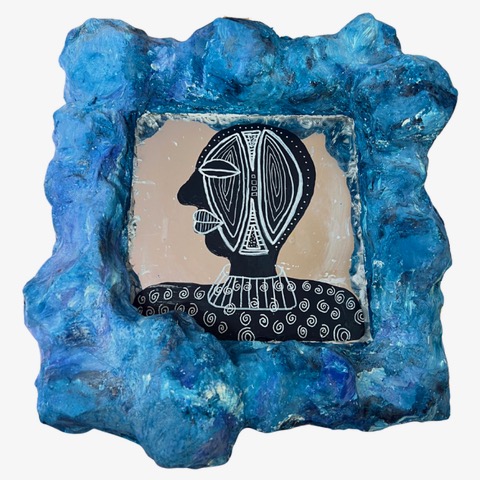
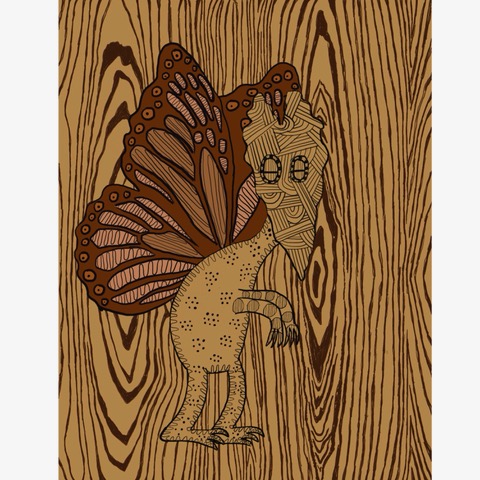
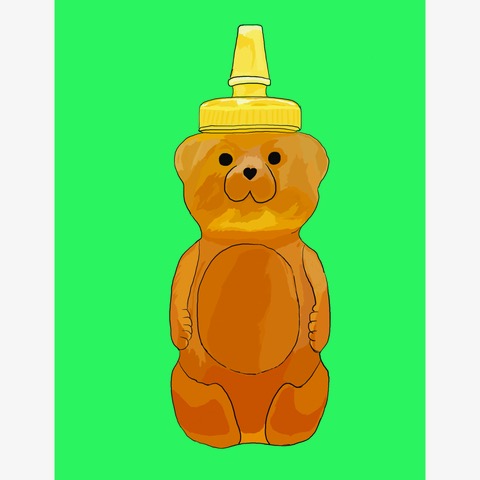
Using upcycled materials in my art is something that came very naturally and organically to me. It’s been a part of my practice and my lifestyle for as far back as I can remember. I was born and raised in Alaska, but my family is originally from the South, North Carolina and Alabama. They were people who lived off the land and didn’t believe in waste, so upcycling and reusing materials has been something I’ve always been around in all aspects of my life. I also come from a family of ministers at an outside-the-box kind of church, one time my mom preached a sermon based on the Meyers-Briggs personality types, and she gave each member an individual message. Mine was, “continue to see the art in broken things.” That’s how I approach both life and art. I see the value and potential in things that other people may view as trash. Everything has beauty and purpose if you’re willing to look for it.
I first began the process of using upcycled materials in my art by simply looking around at what I had. I’ve always had a passion for the environment, so it was important to me to continue that passion and advocacy through my art. But it’s not just sustainable, it’s also quite cost-effective! Art supplies are expensive, so a good way to not become a “starving artist” is to upcycle and use what you have! I enjoy the challenge of having to be creative in finding a use for things outside of their intended purpose, especially discarded things.
As a former wellness professional that comes from a family of healers, I already had a knowledge of using natural elements for multiple purposes, such as using herbs and flowers as dyes for paint. I began painting and creating on recycled canvases, mirrors, wine bottles, all kinds of different unconventional upcycled surfaces, and that practice has continued today. I’ve expanded to using all kinds of different materials: synthetic braiding hair, natural food and plant dyes, old newspapers…I’m constantly finding inspiration in the things I find around me, and that informs my practice and my use of upcycled and unconventional materials in my work.
Wura
– Which part do you enjoy more, the challenge of finding something to use or the satisfaction of achieving it?
I would say I enjoy the satisfaction of having achieved using something more than the challenge of finding it. In my process, I more often let the items speak to me rather than the other way around. A walk through the thrift store or in the park brings about ideas of all kinds. I don’t as often have an idea and then try to find things to fit that idea. That does happen too, but I truly find inspiration everywhere and am open to allowing things to come to me. Some call it vibes or energy, and I do think that’s what it is, but I believe it all really comes from the Divine. I’m connected to the ultimate artist.
And I think it goes back to seeing the world in a different way than some others may. Because I’m always trying to see the value in everything, everything becomes useful. I do have to keep it in check though! Because I see uses for so many things, it can easily start to pile up. So I try to be mindful of overconsumption even with reclaimed items. Plus, I operate better in a tidy space, so I can’t let it get too crazy.
– Do you think there is such a thing as a piece that is too much all at once? Like you said, you tend to see the vision in many things but you have to control yourself.
I definitely don’t think there is such a thing as a piece that is too much all at once. I have vestibular and vision issues from being struck by a car traveling 48mph while crossing the street in 2017, so pieces with a lot going on can for sure aggravate my symptoms. However, I believe that every aspect of a piece gets chosen with intention, so it’s never too much. Whatever is meant to be a part of it, is what ultimately makes the final cut—there’s a reason each aspect is part of a piece.
For my art, I would say that I’m usually maximalist in vision but somewhat minimalist in execution. Meaning, I see the vision in many things, but I enjoy a certain level of simplicity in my work. There may be small patterns or repetition, but I often find that less is more when it comes to my work. Simplicity carries a certain level of impact that allows for specific elements to be more strongly emphasized.
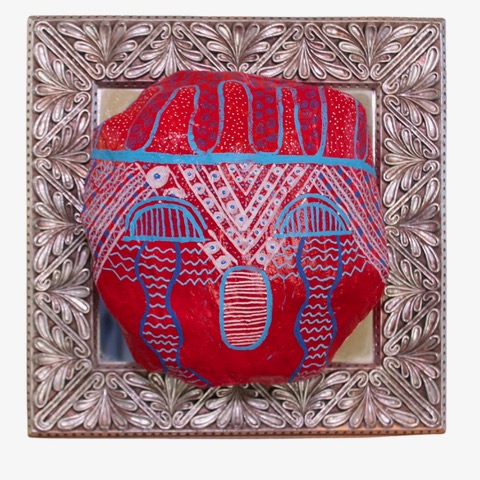
One thing I often find myself doing is continuing to evolve a piece until it is out of my hands. I have a piece, “Wura,” that is going to be featured at an upcoming exhibition and it’s a really good example of this. It’s an African mask-inspired piece made from plaster, spray paint, marker, synthetic braiding hair and hair embellishments on a second-hand mirror. It went through about three iterations before becoming its final form. It started as just the mask on the mirror, then I added the hair, then the embellishments, and finally ended up changing the hairstyle. I’m pleased with the final version, but if it was still in my possession, there’s no guarantee that I wouldn’t change it again.
– Where is it that you hope this will end? When the light turns off, what would you love to leave behind?
When the lights turn off, I hope that people feel like my work touched them and gave them a different perspective to consider. I hope my work both challenges viewers, and makes them feel seen, and I hope that everything I do glorifies the Creator. It is my goal in all that I do to help people and essentially be a walking, talking safe space, so I hope that’s what I leave behind as my legacy in both my art and life. I hope that I was able to give a voice to and advocate for those who feel powerless or unseen. At the end of the day, I just really hope that people are able to enjoy what I leave behind and feel like I contributed positively to the world and all its citizens, no matter their background. Cheesy as it sounds, that’s the truth!
Join the Newsletter
Connect with Cazoshay
To follow Cazoshay, you can find social media profiles here:
Website
Collected Cazoshay
Read other articles in the issue
- Colour, Change, and Rae’s Creative Survival
- Drawn to the Story; Marta rediscovers the artist
- Ghost Stories in Ink and how Sophie is a medium
- Not About Me: Art, Aspiration, and the Irony of Representation with Katie
- The Literal Art of Becoming Whole with Ellie Rose
- What the Hands Remember, K is hoping for connection
- Wonderment: Enchanted light with Crystal
 ManicWorld Magazine