Learning to Look Again when Janneblanco Paints Roller-blinds
‘Finishing my artwork is a decision; after random touches, I just decide that my artwork is ready.’
– You’ve shared that your initial intention when you start painting doesn’t end up being the same when you finish the piece. What happens in between the initial idea that you had and when you finish the piece?
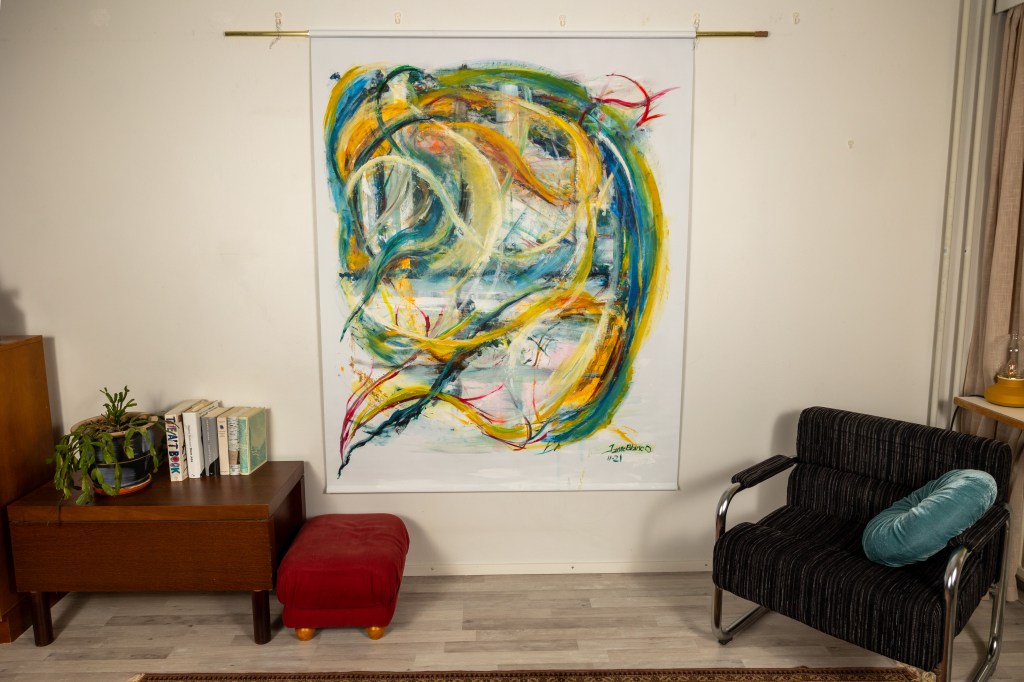
Usually when I start, I may not have an idea. It starts with expression, I pick random colours and brush them on the canvas randomly. Sometimes I may use some measurements with the golden ratio, but I don’t obey them too much.
When I have painted for a while (that time unit is very hard to describe), I have some kind of feeling where I go with that artwork. Depending on shapes and lines, the idea can be very abstract or I may see something figurative.
Then I start to push my artwork that way. Sometimes I may get the feeling that now I have ruined my artwork, but nowadays I can recognise that ”ruined artwork” phase, and usually I just get more depth to my painting.
Finishing my artwork is a decision; after random touches, I just decide that my artwork is ready.
– You said that when you get to the ruined artwork phase, you usually just add more depth to your painting, what does that mean practically? How does this show in any of your recent work?
That word “ruining” was a bit of exaggeration and my own humour, but I may have some idea on my mind about what I’m going to do next. When I paint, I may forget that original idea in a flow-state and then the painting isn’t looking like it was supposed to. It is very hard to describe or give examples, because it is just in my mind.
– Which part of yourself, personality, experiences and ideals do you think reflects in your work the most?
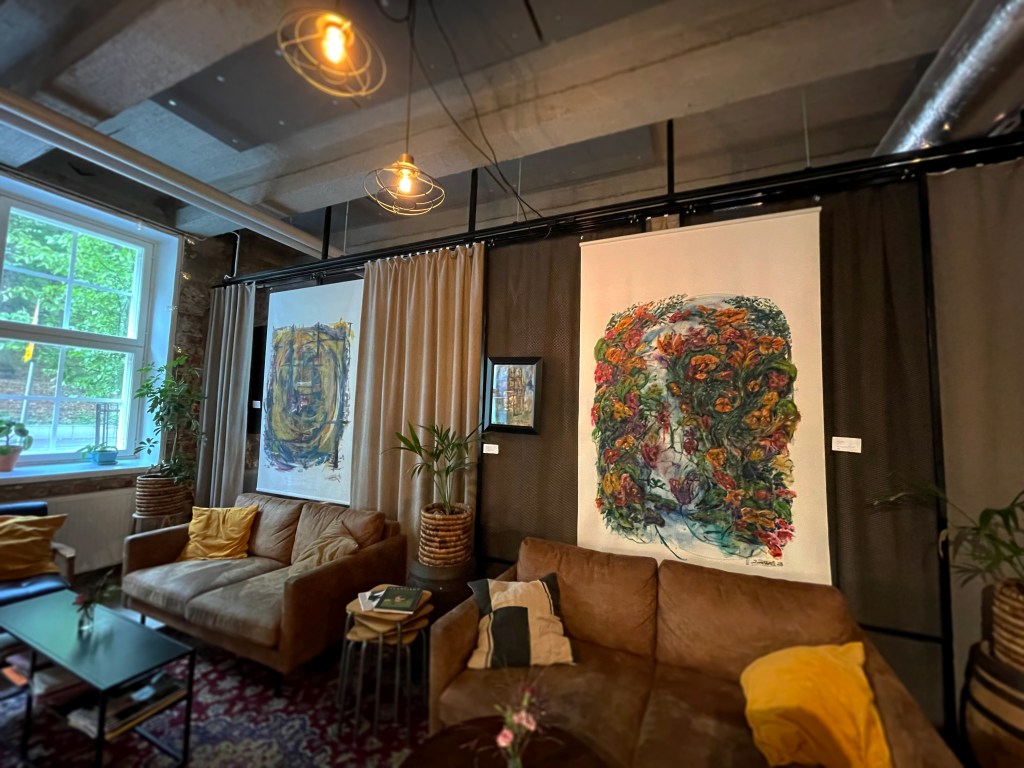
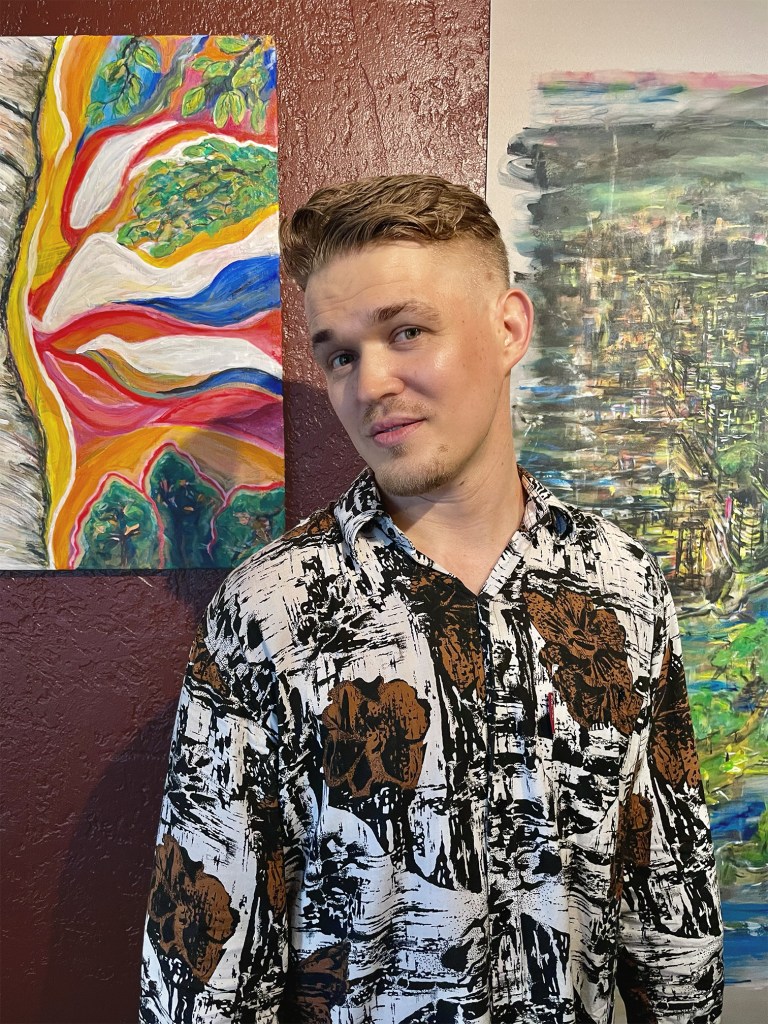
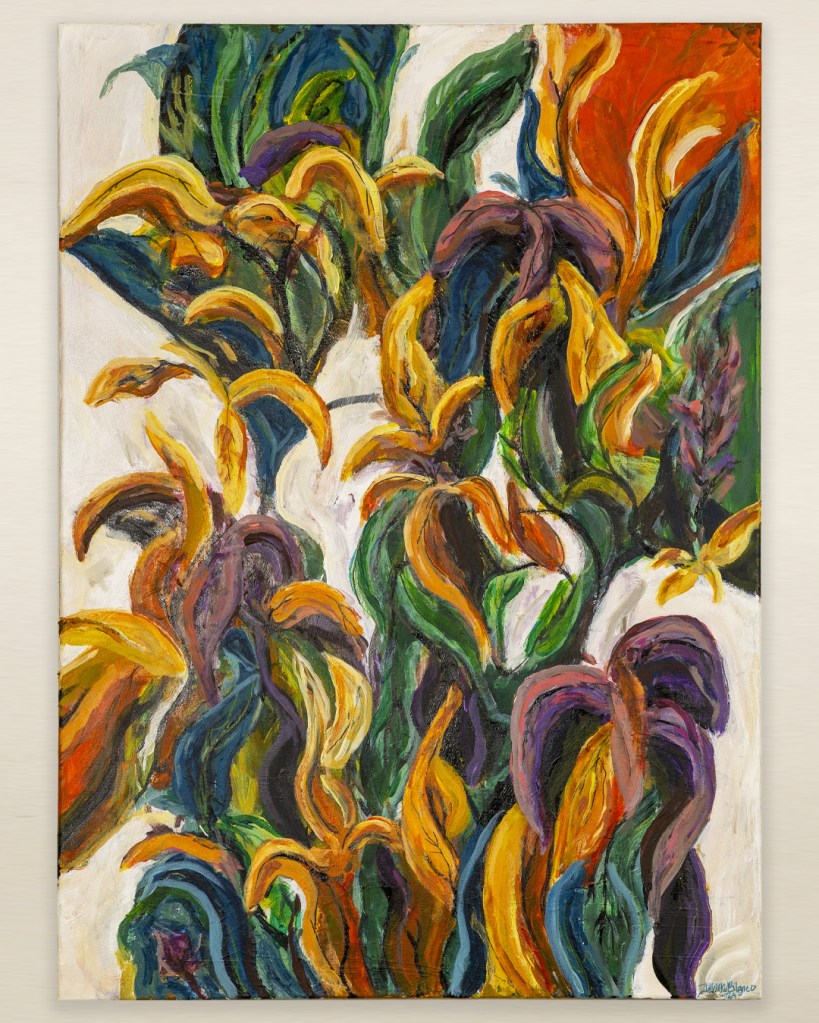
I think personality and also my current situation in life. For example, when I was working on my thesis, I made artwork called Ontuin (name is not so important, basically it doesn’t mean anything) that was very complex and chaotic, but there is also clear way where I’m going.
Then there is Blind-flow, it is painted in springtime just when summer is starting to bloom and everything is nice and warm.
– It seems that your work seems to be either completely abstract or otherwise? What are the influences on your work outside of your life and experiences?
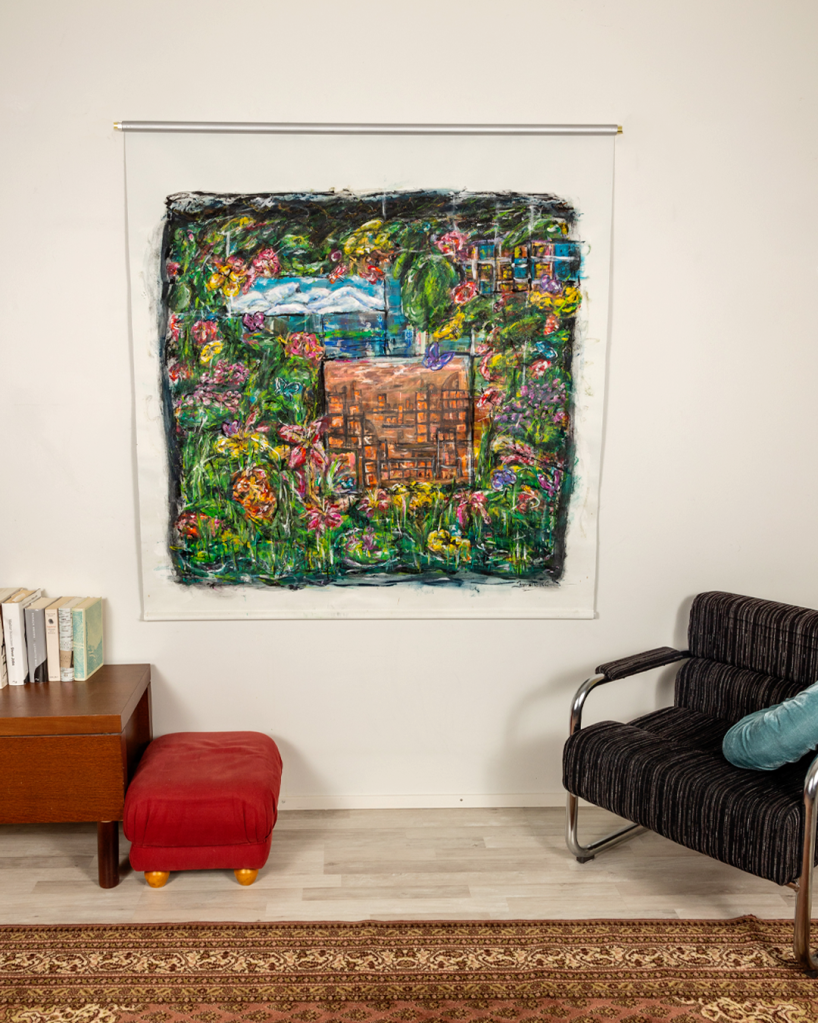
That’s a very hard question. Sometimes I listen to music and let it flow. I also paint something that represents something but I like to give a hint of abstraction. I feel If I copy what I see, I’m just not satisfied with the look of the artwork.
I mean first I draw a quick sketch of the tree and then I painted it. That is very uncommon, but I think I want to do that more.
It is hard to describe that unsatisfactory; maybe it is a lack of flow or inspiration.
– So what is the story behind your career in creating art?
I have almost always been creative. I drew comics as kid, designed fantasy worlds as a teenager. Then I got a break from creativity until I went to study service design at the Institute of Design in Lahti. There we had art classes, and I noticed that painting is nice and helps me to focus.
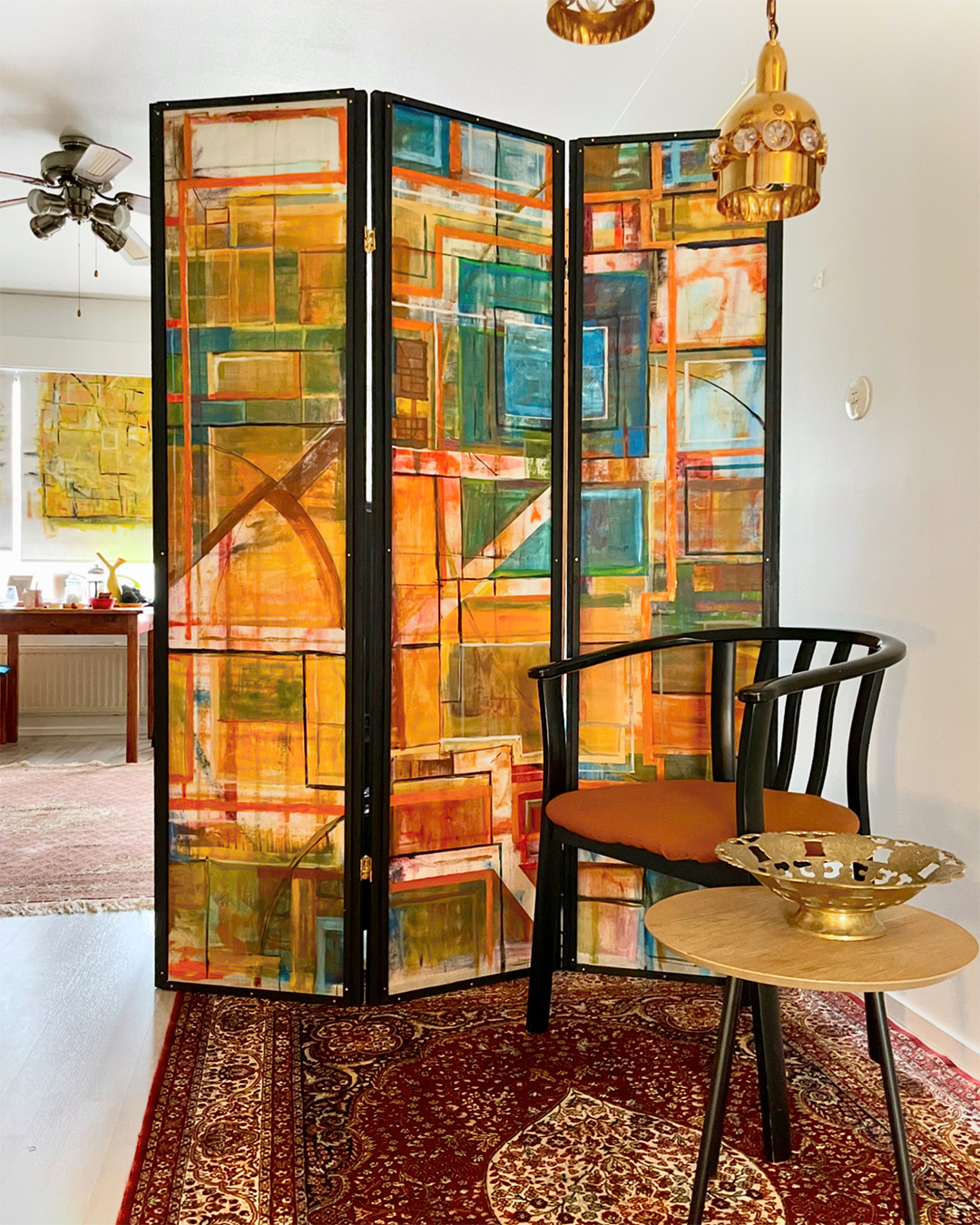
I wanted to paint something huge. I asked if my dad had some old canvases or something. He gave me an old roller-blind to create canvases, but I decided to use the whole roller-blind for one artwork. After finishing that artwork, my girlfriend asked if that works as a roller-blind and artwork same time. We decided to try, and I noticed that a painted roller-blind works as a regular roller-blind and it had potential.
– How would you describe your experience as an artist so far? Any high or low points or moments that you have learned from?
I think I have learned to examine my artworks during the process. Earlier, I just painted almost randomly without paying attention to composition. Of course, as an expressive artist, my style is based on expression, but I have learned to lean backwards and think what parts of paintings work and how I should proceed. For example, nowadays I cover a section from canvas with whatever scrap paper, magazines etc I have, that way I can create depth to painting, otherwise I just paint all the canvas same time with same style and colours.
For example, I covered big part of a roller-blind to focus on specific parts during painting of Fold-blind.
I also have learned that I really need to use high quality paints. In the early days of my painting, I just bought random cheap acrylics that just don’t bring enough contrast and pigment. Sometimes pricing of high quality acrylic paint is a problem, nowadays it is really hard times so people just don’t buy art that much, I can buy high quality supplies enough.
An interesting thing that I have also noticed during sales and exhibitions is that if I have some artwork that I’m not completely happy with, someone else may be really excited and stunned by that artwork that I may not like so much. There are few times I have sold some artworks I haven’t felted satisfied with enough. Then there are some artworks hanging on my walls, that I’m really satisfied with and excepted that I’m going to sell it really fast.
 ManicWorld Magazine