The Alchemy of Vulnerability: Inside the Creative Pulse of Women Artists
‘ When intuition meets clarity, and emotion finds its expression through conscious awareness.‘
– Why did you want to write this book?
The idea for this book was born out of shared conversations and lived experiences with a fellow female artist. We both had navigated the challenges in the highly competitive art world, facing self-doubt, lack of visibility, and the constant pressure to prove ourselves as women artists.
What struck me most was how many incredibly talented female artists quietly struggle with insecurity, often questioning their worth and place in the art scene. This book became a response, a way to uplift, connect, and create a space where women artists can see themselves reflected in strength, vulnerability, and creative power. It’s a celebration of our collective journey and a reminder that we’re not alone, male and female.
– Has anything surprised you in the process of putting it all together?
Yes, what truly surprised me during the process of putting this book together was realising just how precarious the situation is for so many female artists. I knew there were challenges, but I hadn’t expected the lack of financial support to be so widespread. Artist after artist shared the same story: immense talent, powerful work, but little to no funding or resources to back their creative journey, let alone support a collaborative project like this one.
At first, it was disheartening. But instead of giving in to the limitations, I chose to see it as a call to be even more resourceful, more determined. I explored alternative ways to make it happen, through community, partnerships, and creative problem-solving. This project became not just a book, but a testament to resilience: proof that when artists come together with vision and heart, they can build something meaningful, even without the systems that don’t support them.

– What do you mean that this book would be a ‘temple of the muse’?
The ‘temple’ is symbolic of a place where we reconnect with something greater, intuition, soul, truth and the ‘muse’ represents that inner force that guides and ignites our artistic expression. This book becomes a community. It holds space for vulnerability, transformation, and empowerment, reminding us that art, when rooted in authenticity, has the power to heal, to liberate, and to unite.
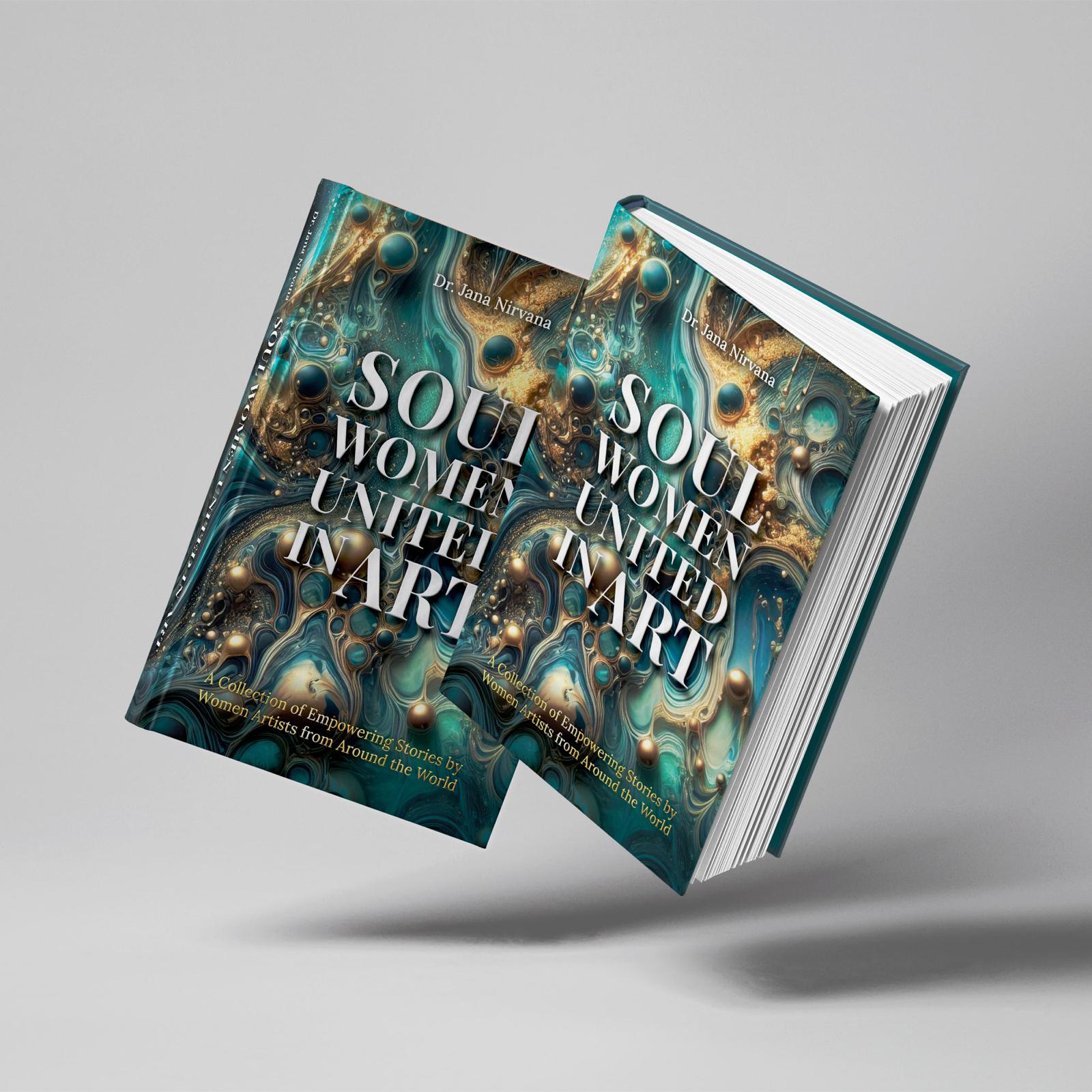
When I describe Soul Women United in Art as a “temple of the muse,” I’m speaking to the sacred space this book creates, one that honours the creative spirit in its most raw, powerful, and feminine form. It’s more than a collection of artworks or stories; it’s a sanctuary where inspiration is not only invited but revered. Each artist featured brings her own voice, her own fire, and together they form a kind of living altar to the divine impulse that moves us to create.

– What is the most satisfying part of writing for you?
The most satisfying part of writing for me is witnessing how deeply transformative the creative process is. Every time I sit down to write, I enter a space of discovery, not just of language or ideas, but of myself. Writing becomes a mirror, a portal, a teacher. It allows me to process, to reflect, to evolve.
There’s a kind of alchemy in shaping thoughts into words, an unfolding that reveals new layers of awareness and emotion. I love how the act of creation never leaves me unchanged. Writing, for me, is not just a means of expression. It’s a journey of becoming.
– What do you hope this book will mean to the writers featured in it?
I hope this book will remind the women featured in it that showing up in their vulnerability is a profound strength. To share one’s inner world, the doubts, the dreams, the raw truths, is an act of courage, especially in a world that often asks us to wear masks.
Through this book, I want each contributor to feel seen, valued, and empowered, not despite their vulnerability, but because of it. My hope is that they recognise the power in their voice, the beauty in their honesty, and the solidarity that emerges when we dare to be real. This book is a testament to the strength that lives in openness, and to the healing that happens when we tell our stories together.
– What do you think has been the greatest influence on your writing up until this point?
The greatest influence on my writing has been the source itself, the quantum field, that vast, intelligent energy that connects all things. It’s where inspiration lives before it takes form, where ideas are born in silence and intuition.
When I create, I try to tap into that space beyond the rational mind, a place of deep stillness, resonance, and knowing. It’s less about crafting and more about channeling. That connection—to the unseen, the universal, the sacred, is what continues to shape and guide this book project.
– As a writer in this age, what would you consider as a milestone to celebrate?
One milestone I truly celebrate is presenting Soul Women United in Art in London during the launch event of the Cinema Collective Hub. To share this book, a labor of love and vision, within such an inspiring and cross-disciplinary community felt like a powerful affirmation of its purpose.
It was more than just a presentation; it was a moment of connection, visibility, and resonance. Talking there, surrounded by creatives, change-makers, and visionaries, I felt the energy of the project come even more to life. This marked an important point for the growing of this book project.
– Do you think that writing is a way of creating a sort of freedom for yourself?
Yes, writing is deeply liberating for me. It’s a space where I can lay everything bare; thoughts, emotions, questions, truths, without judgment or restriction. Writing it all out allows me to release what’s held inside and transform it into something meaningful.
-Last but not least, if your creativity could only come from either your heart or your brain, where would you choose and why?
If I had to choose, I’d say my creativity flows from the coherence between heart and brain. True inspiration, for me, arises when thought and feeling are in harmony. When intuition meets clarity, and emotion finds its expression through conscious awareness.
The heart brings depth, truth, and vulnerability; the brain offers structure, language, and intention. It’s in their alignment that my most authentic and impactful work is born. Creativity, at its highest, is not a matter of choosing one over the other, it’s about allowing them to dance together in balance.
Join the Newsletter
Connect with Anjana Nirvana
To follow Anjana Nirvana, you can find social media profiles here:
 ManicWorld Magazine