Christina on Storytelling Through Objects
‘The great thing about photography is you are capturing a moment in time.‘
-Why do you classify your work as fine art phot0graphy and what does that mean to you?
Fine art photography means not doing head -shots or weddings. You are not using your photography work in a commercial sense. With a medium such as photography, especially in the era we live in it’s important to let others know that a photograph is fine art. For me, I display my work in galleries and the subject matter reflects that. I started out doing portraits and have learned throughout the years that a portrait is trickier to convey that it is fine art. I decided to switch to telling stories through objects to make a narrative come through. Not saying you can’t display a fine art photograph, just for me personally it was not clicking.
-How has it been getting ready for the Exhibition in March?
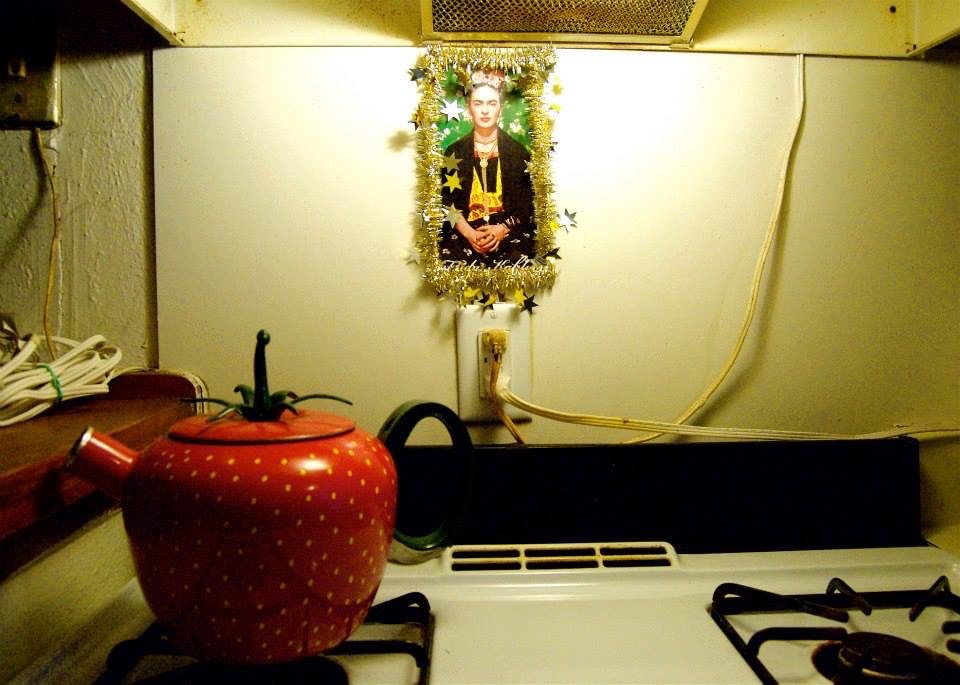
I have displayed my work there in the past. It is a local gallery in my town that does an annual juried exhibition. It is their 50th year for this particular juried show. It includes about 100 works of local art and a different juror each year. In 2021 I received the L. David Dwinell Excellence in Visual Arts award. My work for that was similar to the work I am displaying this year in the sense that it is an interior. I shot my kitchen I was living in years ago, with an image of Frida Kahlo. The great thing about photography is you are capturing a moment in time. It became an autobiographical work displaying the bleakness I was feeling as a struggling artist.
– Does being exhibited validate your work at all or are you the kind of creative who tends to swim against the current?
I think as artists and creatives we all need wins no matter how big or small. It keeps us going and reminds us that this is why we have chosen this path. Especially for someone who went to art school I want to prove more to others that it was worth pursuing art. I think it is also ok to swim against the current as an artist. There should be a balance of internally being proud of yourself and believing in your work along with some recognition. I have had years where I would continue on no matter outside feedback, but when you do get appreciated and rewarded it does help.

–What was your first project and how has it set the tone for everything else that you have done?
As I have said before in art school I started out with portraits because that was available to me. I tried to keep up with the fine art portraits, but it became harder to schedule shoots for both parties. I have seen some artists decide to shoot only self portraits since you are always available. I felt the same way with objects. I knew I could use a prop to convey the same message. I have also found that I tend to personify an object as if it is a portrait of a person.
-Tell us more about your exhibition at Lyndon House Arts Centre in March? What inspired the project and why did you choose the pieces that you did?
This year is very special to me because the photo that was chosen was my Aunt’s kitchen in San Diego California. We used to see each other every summer and I have shaped my life choices around her example. Her kitchen is very maximal and extravagant. She is a collector of beautiful things and it is a teal green that she painted along with flower details. I decided to paint the frame the same colour as well as if she painted it herself.
-Some of your images seem surreal, is this intentional and how have you achieved this?
In school I was taught to shoot everything “in camera”. This means you are trying to set up a photo in person without the help of photoshop to manipulate the image in “post”. I am not a post production photoshop master so shooting and setting up the piece is more out of necessity. I have landed on the surrealness of most of my images more by accident. When I plan a shoot or come with an idea I normally get a piece of a concept then work backwards from there. When I do the shoot and stand back I realize there is a story there that naturally emerges.

-What message do you aim to share through your work?
I think the message as a whole is it is ok to feel emotions. It is good to document what brings you joy as well. As a female artist I sort of noticed that women are the ones that focus on message first versus what lens was used. I think it doesn’t matter how the image was shot. I use my iPhone to shoot my work now. I have seen other artists use a photocopier to convey a message. If I were to give a budding photographer advice it would be to start with the emotion and story first before equipment or how many megapixels it has. Even working with a plastic film camera can give more of an impact than perfection.
-How much of yourself, your experiences and your life do you pour into your work? How has this been perceived over the course of your career?
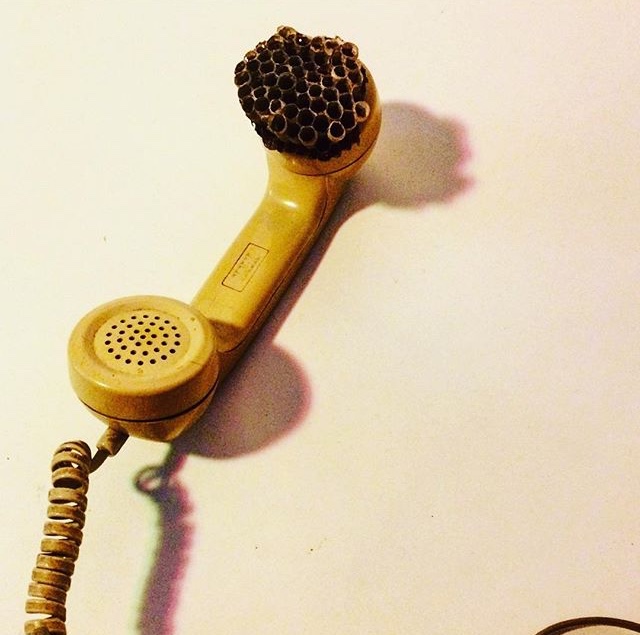
As artists our job is to make people feel something. It could remind them of their past or a feeling. In my own life, I suffer from OCD and anxiety. I have had photographs that lean into that feeling and the choices I made such as using a certain colour or lighting helps with that feeling. I have a piece of art that has a telephone with a hornets nest resting at the top of the ear piece. Both are yellow, which, in color psychology, creates an anxious feeling. And the title of the piece is “We Need To Talk,” a universal phrase that makes the heart beat faster and increases blood pressure.
-Last but not least, if all the nations of the world got rid of borders, what do you think people would follow? Art, music or food? And where would they go?
Art has proven the test of time throughout history. When I was in school taking classes on art, history proved that a civilization needs to express themselves. Before the invention of paper or a camera, they would paint or carve into stone. To me, music, food, art are all expressions that maybe we can not say out loud. Certain people gravitate towards certain mediums to express themselves. The question of where would they go? We go where we feel we belong. I live in a very music focused city and it is a welcoming hug to the arts and music. People tend to go where their “tribe” is.
Join the Newsletter
Connect with Christina
To follow Christina, you can find social media profiles here:
Socials
Instagram
Read other articles in the issue
 ManicWorld Magazine