The Dual Journey of Photography: Reality and Perception with Margaux
‘I love capturing the essence of a person, being the witness of their unique beauty. It’s simple, it raw, it’s beautiful.‘
-What matters most to you, the raw file or the editing process?
I think both of these stages are complementary, and I wouldn’t enjoy my job (or even do my job) if either of them were missing. I love the raw file because it captures the reality of a moment. The editing process, on the other hand, reflects my perception of that reality, what I felt in that moment and how I saw it myself!
To me, editing is almost like adding a signature to a painting. Someone else might have captured the same moment (raw file), but everyone’s perception of that moment is unique, and so is my edit. So yes, both matter to me! You can’t have a painting without the canvas (raw file) or the paint (editing process). And this is why I decide to not share my raw files with my clients. I don’t include film photography in this reasoning, that’s a whole other approach.
–How much of yourself is present in your photos?
Because of my hypersensitivity, it’s really hard for me to separate myself from the media I create. As I mentioned in my previous answer, the way I edit my photos is a direct result of my perception of the moment I captured—how I imagined it.
As Rick Rubin stated in his book The Creative Act: A Way of Being, “No matter what tools you use to create, the true instrument is you. And through you, the universe that surround us all comes into focus” (Rick Rubin, “The Creative Act: A Way of Being”)
Imagination and intuition are key ingredients in my photography, and both are deeply tied to who I am. However, some areas of my job require more personal input than others. When I shoot with people (portraits, live music photography, engagement photography etc), I imagine sounds, colours, and movements. In these cases, I’m fully present in both the process and the final product.
If I’m shooting for a brand, however, while there will still be a bit of me in the edit, I also merge my vision with the brand’s identity, following its guidelines. This requires me to conceal certain aspects of my ideas and personal style, which I find to be a really interesting exercise!
I’d like to add, that I’m constantly inspired by many talented artists such as photographers (Lee Miller, Elizaveta Porodina…), directors (Greta Gerwig, Luca Guadagnino, Céline Sciamma…), cinematographers (Rina Yang, Sayombhu Mukdeeprom,..) musicians (Sufjan Stevens, Daughters, Sofiane Pamart…), authors (Patricia Highsmith, André Aciman, Jane Austen…) but also by my friends and family. So there’s also a bit of them in my photos.

–Was there ever a time you were fed up with photography
Yes, but that usually happens when I’m also fed up with myself.
I’ve found that photography is almost like an extension of who I am. If I’m not in a good place, I won’t feel drawn to creating anything. I also value quality over quantity, so when I’m asked to deliver a large number of assets within a really tight deadline, it can be frustrating. That pressure sometimes leads to an irrational urge to quit and go back to my legal career! But then I take a step back, reset, and create something just for myself.
I think the key to maintaining a love for photography is setting aside time to create without any specific goal or intention. It needs to remain a passion, not just a job. Passion projects are what keep the spark alive! Fortunately, over the past year, I’ve had a diverse range of clients, which keeps me inspired. From live music and portrait photography to product, automotive, and wedding photography, if I ever feel burnt out in one area, I can always switch to another!
–Have you ever had to give up on an idea?
Well, if it’s something I really want I wouldn’t usually give up on it, I would just store the idea for later, for the right moment. This is going to sound super cliché, but I think most things happen for a reason. I have an actual example of this, that happened to me last month.
Someone was looking for a photographer to cover a few live music gigs around Cardiff. I applied to this opportunity, but a week later I got an email stating that they didn’t need me anymore. The exact same evening, at 22:10 I got an email from the manager of one of my absolute favourite French singer, offering me a photo pass for her gig in Bristol end of February.
If I feel not ready for an opportunity I will just not accept it straight away, I’ll work on the specific skills required for its success and then accept it. So it could look like I’m giving up on it, but I’m in fact just in a training, development process.
I might fully give up on something one day, it just hasn’t happened yet.
I also don’t think every idea needs to be brought to life, it’s just part of the creative experience. If I acted on all of them, I’d probably be burnt out by now!
I already quoted Rick Rubin in a previous answer, but this one applies perfectly to the point as he stated “Turning something from an idea into reality can make it seem smaller…The imagination has no limits. The physical world does. The work exists in both”. (Rick Rubin, “The Creative Act: A Way of Being”)
–Why live music photography?
I tend to be a bit of a control freak, both in my personal life and in my work. Everything needs to be as close to how I imagined it as possible. In the studio, I’m in charge of the lighting and, to some extent, the poses by directing the model I’m working with.
Live music photography, on the other hand, forces me to embrace chaos. It teaches me to accept that I can’t control everything. I can only capture whatever is given to me. The lighting, the poses, the environment, they’re all out of my hands. My job is to adapt to a setting I didn’t create, and transform it into something of my own through editing.
At first, this was incredibly stressful for me. I started my photography journey at my full-time job, where I primarily shot products in a controlled studio environment. Shifting to live music photography felt like a brutal, but beautiful, slap in the face. I was lucky to start this journey thanks to a friend who created and hosts one of Cardiff’s most popular jazz nights, Yardbird. He gave me the opportunity to photograph the gigs, and over time, I fell in love with the process.
I got my first official photo pass last year through an incredible non-profit organization called The Name Game. Their mission is to help female, non-binary, and trans people navigate the music industry by offering photography opportunities across the UK. I applied for one of these, won, and got to capture the bands Fckers as well as Confidence Man at Bristol Beacon. I was so nervous, but that night, I realised that live music photography is one of my favourite forms of photography.
One day, I hope to join a talented band or artist and document their touring journey.
–Does taking pictures of cars excite you as a Formula1 fan?
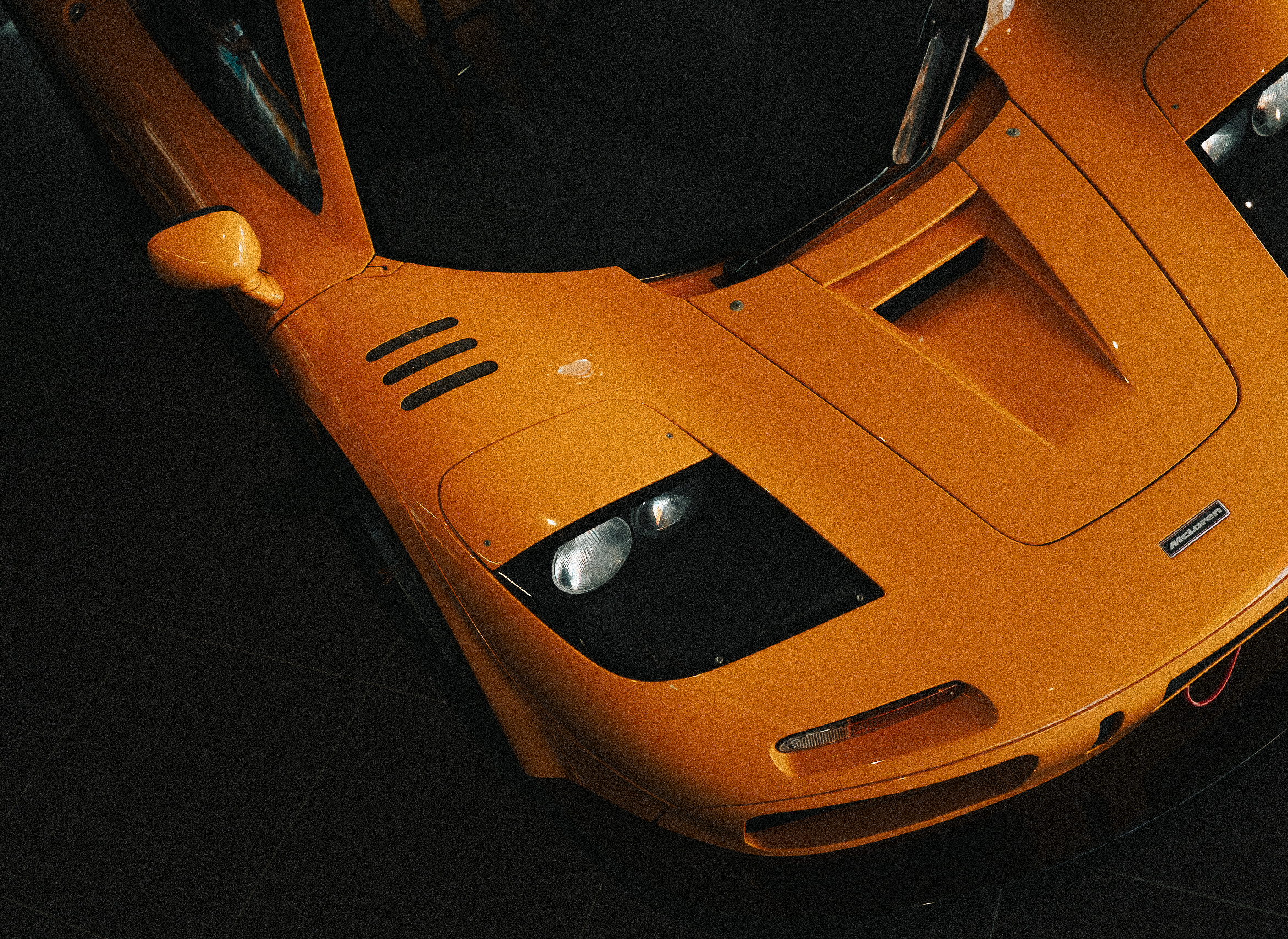
Oh, hell yes! I actually have a secret dream (which won’t be so secret anymore, let’s call it a ‘manifestation’ now). I’d love to photograph a Grand Prix! I had the amazing opportunity to visit the McLaren Technology Centre last year, thanks to a friend who works there. Of course, I brought my camera along and photographed the experience. I felt like a kid in a candy shop, except the candies were slightly more expensive. It was surreal being so close to those legendary cars.
That same year, my girlfriend got me tickets to the Festival of Speed. I took my camera and spent the day capturing the event. Once again, it felt like a dream. I got to see and photograph some incredible drivers (as well as Daniel Ricciardo’s radiant smile).
I love photographing the details of cars; they make such photogenic models. I’m heading to Silverstone in July, so I’m hoping to add even more to my portfolio!


–What is the ‘3 Women Project’?
It all started with a solo date to the cinema at Chapter Arts Centre to watch LEE. I was left speechless, firstly because the film was absolutely stunning, and Kate Winslet was striking in her role as Lee Miller. But more importantly, I was deeply moved by Lee Miller’s story. Her remarkable work as a photojournalist during World War II was largely overlooked. I felt a deep sense of frustration and even betrayal, why had the media and history books never given her the recognition she deserved? I had never heard of her before, even though she was one of the first photographers to document the horrors of the Second World War. I asked a friend who studied photography at university if he knew of her or her work but he told me that she had never been mentioned in any of his courses.
Watching the film and learning about this incredibly talented yet under-appreciated artist reminded me how often women’s contributions in art and media go unrecognised. It sparked in me a deep desire not only to learn more about Lee Miller’s work but also to showcase the talent and work of the women around me.
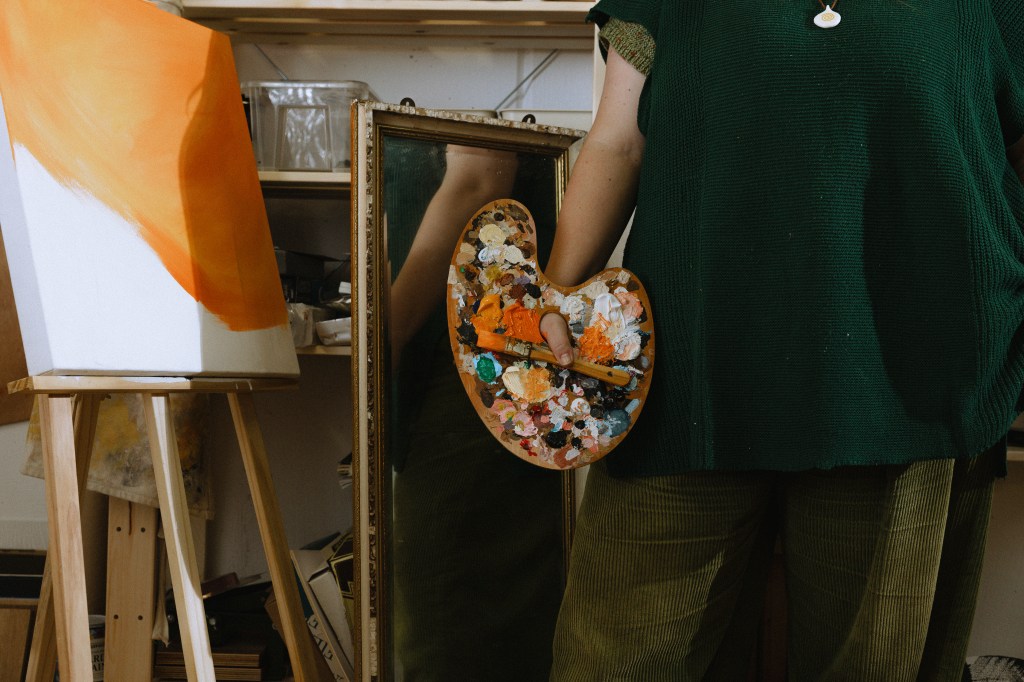
That’s how the 3 Women Project was born. I wanted to find a way to highlight the work and projects of three women through a series of portraits that would showcase who they are and what they create. To make this happen, I decided to offer free portrait sessions to three women who:
•Are artists, or
•Have a small business, or
•Have an upcoming project, or
•Have created something and need professional photography to showcase their work.
When I started this project, I had no idea of the incredible connections and support it would bring. So far, I’ve met two incredibly talented artists who have welcomed me into their worlds and allowed me to capture them. I’m currently in a challenging phase of my own creative process, but this project has been a huge source of inspiration. It has helped me so much, and I feel truly motivated to keep going. Thanks to LEE and Lee Miller, this project has become a way for me to celebrate the talent of women around me and share their work with the world.
I was surprised to wake up one day and find that the Instagram account of the home of Lee Miller (now a museum dedicated to her work and that of her husband, Roland Penrose) had liked one of my posts from the 3 Women Project. It felt like the ultimate validation of a project that was inspired by Lee’s story! On that morning, some tears were shed. This project is not over, and I definitely want to continue highlighting many more artists and creators throughout my journey as a photographer.



– You’ve dabbled in various types of Photography, which one has been your favourite?
I go through phases. Right now, I love portrait and live music photography. But many factors play into this choice. For example, when the days get nicer, I love shooting outside, so then I tend to really enjoy engagement, or wedding photography. Currently I’m more drawn to Studio shoots portraits or editorials and live music photography. I don’t think I have a favourite, I like the diversity.
– Portraits or live photos, I’m not asking you to choose, I’m asking you to justify them however you can?
Portrait, I love capturing the essence of a person, being the witness of their unique beauty. It’s simple, it raw, it’s beautiful.
I love showing them another version of what they think they look like. There’s no greater joy in my job to have someone look any their portraits and being shocked of how beautiful they look. That could honestly make me tear up.
Live photos, I love capturing the moments more than the people, the atmosphere of an event. I really feel like I create instant memories.
–How do you capture emotions?
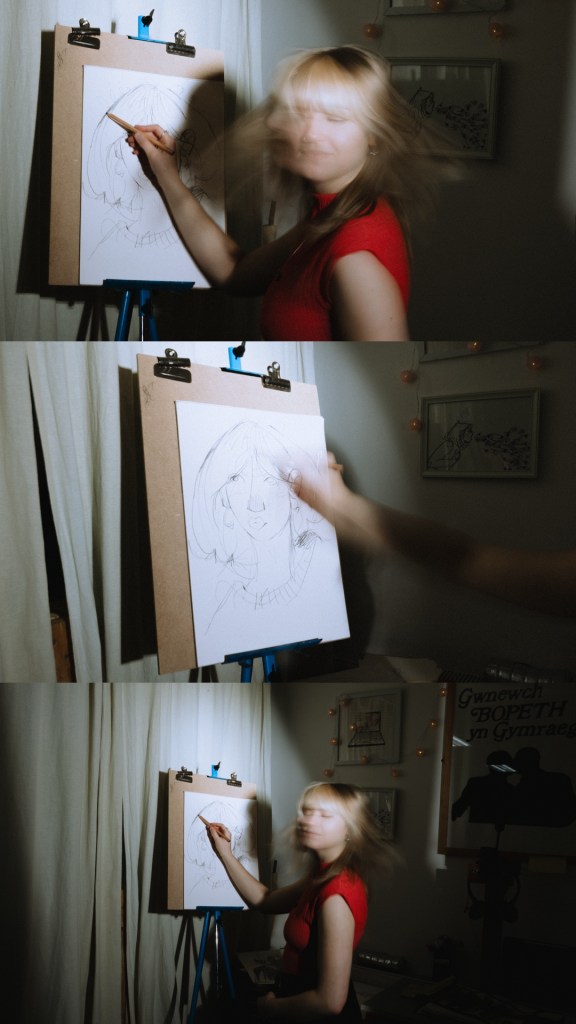
By feeling it first. Then I will use various techniques to illustrate them, through movement, detailed shots, colour, light, and location. Emotion starts within me and the subject before it ever touches the camera. One of my biggest inspirations is film, and I often try to translate that cinematic feeling into my photos. Motion blur in particular, helps me create a bridge between photography and cinematography allowing the viewer to feel motion in a perfectly still image. It’s raw, imperfect, and moving, just like real emotions.
I like to think of my photos as stills from a movie. I embrace movement, blur, and texture because those little imperfections add authenticity. There’s beauty in imperfection.They make my images feel like memories frozen in time, not just snapshots of a moment.
-Last but not least, if all the nations of the world got rid of borders, what do you think people would follow? Art, music or food? And where would they go?
I think they would follow the music, stay for the art and survive with the food. However, my logical sense is telling me that even without geopolitical borders there would still be some immutable ones. Food, Art and Music would create their own borders, separating the different cultures around the world. And I actually think we should embrace this, we learn so much from our differences and mutual cultures.
I would still want to be able to travel somewhere and discover brand new things.
I don’t know if I missed the point of the question but that’s the only answer I can think of right now!
Join the Newsletter
Connect with Margaux
To follow Margaux, you can find social media profiles here:
 ManicWorld Magazine